Advanced Wild Camping UK: 5 Complex Scenarios & How to Handle Them
This page contains affiliate links. As an Amazon Associate we earn from qualifying purchases — this does not affect the price you pay.
That knot in your stomach before a big wild camping trip? Most campers feel it, wondering about permissions or a busted pannier deep in the Lakes. Advanced wild camping in the UK isn’t about survival; it’s about smart logistics and solid etiquette. This guide tackles five tricky scenarios – from legal grey areas to hauling heavy packs – giving you a practical checklist and a confidence boost. Let’s get you sorted.
How Do I Navigate Wild Camping Permissions in the UK?
In England and Wales, Open Access Land only gives you a right to walk – camping there is not a guaranteed legal right, and needs the landowner’s explicit permission unless you’re on the Dartmoor Commons (the one statutory exception). A simple, respectful conversation with the landowner often does the trick. Scotland, by contrast, grants you the legal right to roam and wild camp on most unenclosed land under the Land Reform (Scotland) Act 2003, but even there, you must always act responsibly, follow the Scottish Outdoor Access Code, and check you’re not inside the Loch Lomond & Trossachs National Park permit zones (1 March–30 September).Permission Script
Hi, I’m planning a short walk from [nearest landmark] to [destination] on [date]. Would it be alright if I pitched my tent near the barn for the night? I’ll keep the site tidy and leave before dawn.
A polite “please” and a clear plan usually wins you a nod – and sometimes a cup of tea, as it did when a farmer in Cumbria offered me a brew and warned me about the boggy ground.
If you’re unsure whether a piece of land is Open Access, check the map on Natural England’s website – any land marked with a green “O” is typically public. For everything else, treat it as private and ask. A brief, friendly request that states where you’ll be, when, and that you’ll leave no trace usually does the job. Landowners appreciate the respect and are often happy to point you to a better spot if theirs isn’t suitable.
Why the “golden rule” matters – sneaking in might feel adventurous, but a quick chat saves you a fine, a bad night, and a lot of stress.
Bikepacking Logistics – Combining Transport & Camping
Carrying a bike on a train or ferry can be a bit of a faff, truth be told. Most UK train operators allow folding bikes for free if they’re folded to about 85 × 60 × 30 cm. Standard bikes typically need a reservation and a small fee – around £5-£10 per journey, varying by operator. Always check the specific rules with the train company you’re using, or consult the general guidance on National Rail Enquiries.When it comes to packing, treat the bike as a moving platform, not just a trolley. Heavy panniers on the rear wheel turn a gentle climb into a slog. Many cyclists report that a 12 kg rear bag on a Yorkshire Dales ridge-top route makes a 300 m ascent feel like a hill-climb in the Alps. Switching to a low-profile frame bag and a 5 kg front pannier restored balance and kept the bike handling crisp on steep descents.
Quick tip: Use “gear haul” bags (tight-fit, low centre of gravity) for bulk items like food and shelter, and reserve the bike’s frame bag for tools and a spare tube. This distribution keeps the bike stable on loose shale and helps you stay upright on technical sections.
For more on the right bags, see our review of the Best Bikepacking Bags.
Solo Backpacking in Remote Areas – Safety & Weight Management
When you’re alone in the wilderness, the margin for error feels zero. A satellite communicator such as the Garmin InReach Mini (paid link) isn’t a luxury – it’s a lifeline. In the Cairngorms, sudden snow squalls with visibility under 50 m have caught experienced hikers out. A quick SOS ping on a satellite communicator gets mountain rescue on the line within an hour, guiding you to a safe shelter.
Managing weight solo is a different game. You can’t rely on a partner to carry a broken leg or a sudden water shortage. The “Rule of Three” for solo trips – water, shelter, warmth – should be your baseline, each with a safety margin. Aim for at least 2 L of water per day, a lightweight tarp or bivvy that can double as a windbreak, and an insulated sleeping system that works even if the temperature drops 10 °C below forecast.
Solo trip checklist
- Comms: Satellite messenger + spare battery
- First aid: Compact kit + blister treatment
- Navigation: OS map + GPS with spare batteries
- Food: High-calorie, low-weight meals (e.g., dehydrated risotto)
- Emergency shelter: Emergency bivvy or space blanket
For a deeper dive into satellite options, check our Best Satellite Communicators guide. If you’re keen to learn more about my own experiences and philosophy, take a look at my About page.
You now have the full picture – Download the Free Checklist and make sure your solo gear list is airtight before you head out.
Heavy Load Management – When the Gear Gets Heavy
Not every trek can be ultralight. A week-long circuit of the Yorkshire Three Peaks, for example, often means hauling 40 lb+ (around 18 kg) of food, water, and spare clothing. The Osprey Atmos AG 65 (paid link) AG is superb up to about 40 lb, thanks to its anti-gravity suspension, but push beyond that and the frame starts to sag, reducing comfort and increasing strain on your hips.
Framed vs. frameless packs for heavy loads
- Framed packs (like the Atmos) provide excellent load transfer to the hips, but they need a well-fitted hip belt.
- Frameless packs with a solid hip belt (e.g., a rugged rucksack from Lowe Alpine) can handle 50 lb+ (over 22 kg) if you keep the centre of gravity low and pack heavy items close to your spine.
Technique matters too. On long, gradual ascents, adopt a short, quick-step cadence and keep your shoulders relaxed – a common mistake is to hunch forward, which taxes the lower back. On steep climbs, shift your weight slightly forward and use your arms to pull the pack up, much like you’d haul a sled.
Walkers tackling the Dales with a 45 lb (over 20 kg) pack often find their knees scream after the first day. Adding a hip belt with wider padding and redistributing water bottles to the front frame pocket eases the load dramatically. It’s a belt-and-braces solution that saves your hips for the rest of the route.
For full specs, see the Osprey Atmos AG Review.
Quick Answers
Can I wild camp anywhere in Scotland?
Almost, but not quite everywhere. The Scottish Outdoor Access Code gives you the right to roam and wild camp on most unenclosed land, but you still need to act responsibly. This means avoiding farmland during lambing season, sticking to established sites where possible, and always practicing Leave No Trace principles. The one significant exception is Loch Lomond & The Trossachs National Park, where Camping Management Zones require a paid permit (around £4.30/night) between 1 March and 30 September – camp there without one and you risk a fine of up to £500.
How do I ask a farmer for permission to camp?
Walk up, introduce yourself, and explain where you’ll be and when. A simple “please” and a clear plan goes a long way. One walker asked a farmer near the Lake District, and he not only said yes but offered a cup of tea and warned about the boggy ground. It’s all about showing respect.
What is the best way to carry a bike on a train?
Folding bikes often travel for free if they’re folded to the usual dimensions. Standard bikes typically need a reservation and a small fee, so it’s best to check the specific train operator’s website beforehand and book a bike space if possible to avoid any last-minute hassle.
Is the Osprey Atmos AG good for heavy loads?
It shines up to about 40 lb (around 18 kg), offering excellent comfort thanks to its anti-gravity suspension. Beyond that, the frame can start to flex, and you might benefit more from a dedicated haul pack or a frameless bag with a sturdy hip belt designed for heavier weights.
Do I need a satellite communicator for UK backpacking?
It’s not a legal requirement, but I highly recommend one for remote areas. If you’re heading into the Scottish Highlands, remote parts of Snowdonia, or other areas with no mobile signal, a satellite messenger can truly be the difference between a quick rescue and a long, anxious wait for help.
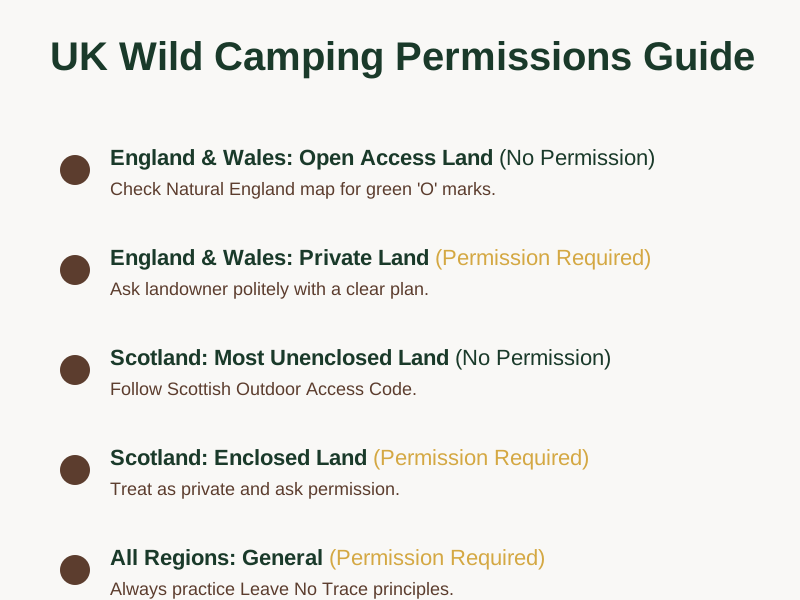
UK Wild Camping Permissions Guide
| Region | Land Status | Permission Required | Key Consideration |
|---|---|---|---|
| England & Wales | Open Access Land | Technically yes (walking right only) | Dartmoor Commons is the one statutory right-to-camp exception |
| England & Wales | Private Land | Yes | Ask landowner politely with a clear plan |
| Scotland | Most unenclosed land | No | Follow Scottish Outdoor Access Code |
| Scotland | Loch Lomond & Trossachs NP zones | Yes, permit (1 Mar-30 Sep) | Book online, ~£4.30/night, fines up to £500 |
| Scotland | Enclosed land | Yes | Treat as private and ask permission |
| All Regions | General | Yes | Always practice Leave No Trace principles |
What to Do Next
Advanced wild camping isn’t about daring stunts; it’s about preparation, respect for the land, and a solid plan for the unexpected. You’ve now got the permission protocol, bike-packing logistics, solo safety fundamentals, and heavy-load tactics under your belt.
The next logical step? Make sure every detail is ticked off – gear, routes, permissions, and emergency contacts. Download the Free Checklist to audit your upcoming trip and walk away with peace of mind.
Remember, the wilderness rewards the well-prepared. Keep it simple, stay safe, and enjoy the freedom that comes with knowing you’ve got everything sorted. Happy trails!
Explore More Topics
Go deeper on specific topics:
- Winter Wild Camping Tips: Staying Warm & Safe in the UK Cold
- Wild Camping with Dogs UK: Training, Gear & Etiquette
- Family Wild Camping UK: Tips for Backpacking with Children
- Planning Multi-Day Backpacking Trips in the UK
- Traditional Backpacking vs Fastpacking UK: Finding Your Comfort Zone
Looking for quick answers? See our Advanced Wild Camping UK: 7 Questions Experienced Campers Ask.
Advanced routes demand solid experience. Build up to remote terrain gradually and always file a route plan with someone reliable.
📺 Watch: Why I’d buy the NEW OEX Heiro over the Jetboil Zip (paid link) — Paul Messner
Products linked above are ones we recommend based on owner feedback and UK-condition testing reports.
📺 Watch: Is a £400 Stove really worth it? — Kent Survival Gear & Review