UK Wild Camping for Beginners: Rules, Gear & the One Thing Nobody Says
This page contains affiliate links. As an Amazon Associate we earn from qualifying purchases — this does not affect the price you pay.
Wild camping in the UK offers incredible freedom, but for many first-timers, legality and ethics can feel like a real roadblock. You’re picturing that perfect starry night, then the worry creeps in: “Am I allowed here? What if I’m on private land?” Most first-timers feel the same. This guide cuts through the confusion, giving you a clear roadmap for where to camp, the gear that actually works, and the simple checklist to avoid rookie mistakes. Let’s get you set for an enjoyable first night.
Quick Picks
- MSR Hubba Hubba NX (paid link)
- Rab Ascent (paid link)
- MSR PocketRocket 2 (paid link)
- Sawyer Squeeze (paid link)
The Legal Reality: Scotland vs. England & Wales
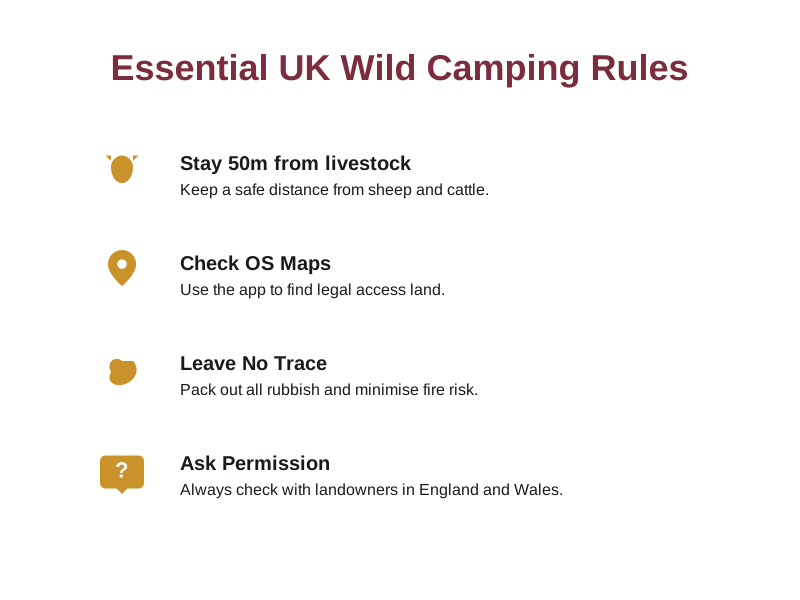
In Scotland the Land Reform (Scotland) Act 2003 gives you a statutory “Right to Roam”. You can camp on most unenclosed land – hills, moorlands, forest tracks – as long as you respect the Scottish Outdoor Access Code (no litter, no damage, leave gates as you found them). The only places you must stay away from are gardens, school grounds and private houses.England and Wales are a different story. The Countryside Code, backed by Natural England, tells you that you need landowner permission to camp, full stop – open‑access land (think mountain, moor, heath, down or registered common) only gives you a right to walk under the CRoW Act, not to pitch a tent. The one exception is the Dartmoor Commons, where a 1985 Act and a 2025 Supreme Court ruling confirm a statutory right to camp. Everywhere else on open‑access land, an overnight pitch is at best tolerated if you’re discreet, well away from houses, roads and livestock, and gone by morning – not guaranteed. “Permissive Access” signs on a path do not give you carte blanche to pitch a tent; they merely allow you to walk.
| Aspect | Scotland | England & Wales |
|---|---|---|
| Legal right to camp | Yes, almost anywhere (except private residences, gardens, schools, and the Loch Lomond & Trossachs permit zones in season) | No blanket right – open‑access land gives you a right to walk, not to camp; Dartmoor Commons is the one statutory exception |
| Main legislation | Land Reform (Scotland) Act 2003 | CRoW Act 2000 / Dartmoor Commons Act 1985 |
| Livestock rule | Same – stay clear of grazing animals | Same – stay well clear of sheep/cattle |
| Example spots | Cairngorms, Glencoe, Trossachs (outside permit zones) | Dartmoor (statutory right), Lake District (requires permission/discretion) |
The takeaway? If you’re heading north of the border, you can generally pitch wherever you find a flat spot – just double-check you’re not in the Loch Lomond & Trossachs permit zones between March and September. South of the border, you need a nod from the landowner, or you need to be on the Dartmoor Commons where camping is a statutory right – open‑access land elsewhere in England and Wales is a grey area at best, not a guarantee.
In Scotland you have the legal right to roam and camp on most unenclosed land (bar the Loch Lomond & Trossachs permit zones in season), while in England and Wales you generally need landowner permission – open‑access land gives you a right to walk, not a guaranteed right to camp, with Dartmoor’s Commons as the one statutory exception. You must always respect the Countryside Code. This simple rule clears up most of the “grey area” anxiety beginners face.
Ethical Etiquette: The “Local Realist” Approach
Wild camping in the UK isn’t just about staying legal – it’s about staying welcome. The biggest source of friction is livestock. Sheep and cattle are easily spooked, and a tent set too close can trample grazing and cause stress.
Do’s and Don’ts around livestock
- Do keep at least 50 m (about the length of a small bus) from any grazing animals.
- Do set up on firm, dry ground to avoid sinking into soft grass that the herd needs.
- Do face your tent away from the herd’s usual path – you don’t want them walking into you at night.
- Don’t pitch directly on a sheep track; you’ll hear them rustle and they’ll bolt.
- Don’t leave food or scented toiletries near a field – it attracts wildlife and can lead to unwanted visits.
Beyond livestock, the Countryside Code (Natural England) reminds us to leave no trace: pack out everything, minimise fire risk, and avoid contaminating water sources. A quick rule of thumb – if you wouldn’t want your neighbour to see it, it’s probably not right to leave it behind.
The “First Night” Survival Kit (Gear Essentials)
{< youtube F-yg3Zi48iQ >} Gear can feel overwhelming, especially with the endless “best for beginners” lists. Here’s the stripped‑down starter pack that’s worth the investment for UK conditions, plus a few gritty notes from my own trips.
Tent – MSR Hubba Hubba NX (paid link) A three‑season, freestanding design that handles the UK’s sudden showers. It’s light (≈ 2 kg) yet sturdy enough for windy hilltops. The downside? The footprint adds a few pounds and costs around £30‑£35 – a small price for protecting the ground and keeping the tent dry.
Sleeping Bag – Rab Ascent (paid link) 15°F (‑9°C) Synthetic fill, so it stays warm even if you get a bit damp. The temperature rating works well for most UK nights, even in summer. Cheap down bags often fail when humidity ruins the loft – synthetic fill handles UK damp far better.
Sleeping Pad – Therm‑a‑Rest NeoAir XLite Inflates fast, offers excellent R‑value for the damp ground. It can be a bit noisy on rocky terrain, so carrying a small towel to cushion the surface helps. If you’re on a soft mossy patch, a closed‑cell foam pad is a cheaper backup.
Stove – MSR PocketRocket 2 (paid link) Tiny, reliable, and runs on standard canisters. You’ll need a lighter or matches – don’t rely on the built‑in spark if it’s damp. Forgetting a lighter and having to improvise with a ferro rod works, but it’s a bit of a faff.
Water Filter – Sawyer Squeeze (paid link) Fast‑flow, squeezable filter that handles river water. The hard part is remembering to back‑flush after a few uses; Missing that step slows the flow to a trickle mid‑hike. A quick squeeze of clean water through the filter clears it right up.
Headlamp – Petzl Tikkina Bright enough for campsite chores, with a simple click‑on switch that works with gloves on. Battery life is generous – a couple of AA’s last the whole weekend.
**Backpack – Osprey Atmos AG 65 (paid link) ** Comfortable hip belt, rain cover, and enough room for the gear above plus a few days of food. Look for a pack with a breathable back system; the UK’s wet climate can make a poorly ventilated pack feel like a sauna.
Starter Pack Flow
- Pack the tent and footprint first – they’re the biggest items.
- Slip the sleeping bag and pad into the lower compartment.
- Stash the stove, fuel, and filter in side pockets for easy access.
- Top it off with headlamp, first‑aid kit and your food supplies.
All prices mentioned are approximately – you’ll find a new MSR Hubba Hubba NX for around £300‑£340, while a used one may be a bit cheaper. Remember, the cheapest gear often costs more in the long run when it fails in the rain.
How Do You Plan Your First Wild Camping Trip?
Planning your first wild camping trip involves careful consideration of location, permissions, and, crucially, safety. You need to map out your route, understand access rights, and be prepared for the unpredictable UK weather. This groundwork ensures you have an enjoyable and responsible experience.
Mapping the right spot
- OS Maps (Ordnance Survey) – the free app shows public rights of way, open‑access land and the “access” symbol (a blue triangle). Toggle the “access” layer and you’ll see which hills are legally okay to camp on.
- iWalk Scotland – great for the Scottish side; it flags the “Right to Roam” zones and even highlights water sources.
Getting permission the easy way
Most farmers are “fair enough” if you’re polite. Here’s a quick script that works:
“Hi, I’m planning a short walk on [date] and would love to pitch a tent for one night near [landmark]. Would that be alright? I’ll follow the Countryside Code, keep a tidy site, and leave no trace.”
Send it as a text or email; most landowners will reply within a day. If they’re hesitant, suggest a spot a few hundred metres away – you’ll often get a green light.
Safety first
UK weather can flip from sunshine to showers in minutes. Check the Met Office forecast, and always tell a friend or family member your route and expected return time. A small “trip card” on your phone with emergency numbers (Mountain Rescue, local police) can be a lifesaver.
For a concrete example, a reader from the Midlands emailed me after trying to camp on a popular path in the Peak District. He’d assumed the permissive sign meant free camping, but the landowner had posted a “no camping” notice a few metres further on. He avoided a fine by contacting the local council, who pointed him to a nearby permissive site – a win‑win.
If you’re still unsure, check out our blog for specific guides, including tips for navigating permissions in National Parks like the Lake District.
The “First Night” Checklist
When you finally arrive, a quick mental run‑through saves you from the classic rookie blunders.
- Check for ticks – brush your legs and socks before you get into the tent.
- Choose dry, level ground – avoid tussocks that can become soggy overnight.
- Set up a light barrier – place a dim headlamp outside the tent to keep bugs away.
- Purify water – run it through your Sawyer Squeeze before drinking or cooking.
- Secure food – store it in a zip‑lock bag or hanging sack away from the tent to avoid attracting wildlife.
One camper pitched a tent half a kilometre from a farm track, only to be woken every hour by headlights flashing across the field. A quick glance at the map would have shown a better spot away from the road.
Frequently Asked Questions
Can I wild camp in the Lake District?
Generally no, unless you have specific landowner permission. The Lake District is a National Park with strict rules, and most areas are off‑limits for overnight stays.
Do I need a permit for wild camping?
In Scotland, no – the Right to Roam covers you, outside the Loch Lomond & Trossachs permit zones (where you do need a paid permit, March–September). In England and Wales there’s no permit system as such, but you do generally need the landowner’s permission to camp – open‑access land covers walking rights only, except on the Dartmoor Commons.
Is a tent or hammock better for UK wild camping?
Tents are usually the safer bet. They protect you from rain, wind and insects, and you don’t need suitable trees – a common limitation for hammocks in the UK’s mixed woodlands.
What sleeping bag temperature rating should I aim for in UK summers?
Target a comfort rating of 0 °C to 5 °C. Even in July, nights on the hills can dip below 5 °C, especially with wind chill.
Can I use tap water to wash my hands while wild camping?
No. Use treated water or hand sanitizer to avoid spreading bacteria in the wilderness. It’s a small step that makes a big difference for both you and the environment.
Legal Rights Comparison
| Region | Right to Roam | Permission Needed to Camp | Key Legislation |
|---|---|---|---|
| Scotland (general) | Yes (most land) | No (except private homes) | Land Reform (Scotland) Act 2003 |
| Loch Lomond & Trossachs NP | Yes, but permit zones apply Mar-Sep | Permit required in zones | Camping byelaws |
| England & Wales | Walking only (CRoW) | Yes, except Dartmoor Commons | CRoW Act 2000 |
| Dartmoor Commons | Yes, camping included | No | Dartmoor Commons Act 1985 |
| Livestock Distance | Well clear of grazing animals | - | Countryside Code |
What to Do Now
You’ve now got the legal lowdown, the ethical basics, a solid gear list and a tidy checklist to keep your first night smooth. The biggest hurdle for most beginners is simply taking that first step – and the best way to do it is with a clear plan in hand. If you’re curious about my own journey into wild camping, you can read more about me.
You now have the full picture — Download the Free Checklist and tick every box before you head out. Once you’ve got that sorted, you’ll feel chuffed about heading into the wild, confident that you’re respecting the land, the law and your own safety.
and may your first night under the stars be the start of many unforgettable adventures.
Explore More Topics
Go deeper on specific topics:
- UK Wild Camping Laws & Access Rights: What You Need to Know
- Leave No Trace Principles for UK Wilderness Adventures
- Planning Your First Overnight Wild Camp in the UK
- Choosing Your First Wild Camping Location in the UK
References
Looking for quick answers? See our Wild Camping UK for Beginners: 7 Questions You Should Ask First.
This is a starting point, not a rulebook. Adapt every recommendation to your fitness level, experience and the conditions on the day.
Products linked above are ones we recommend based on owner feedback and UK-condition testing reports.
📺 Watch: The Countryside Code for Hikers and Outdoorsy Folk — Abbie Barnes