Family Wild Camping UK: Backpack with Kids (Without the Meltdown)
This page contains affiliate links. As an Amazon Associate we earn from qualifying purchases — this does not affect the price you pay.
You’re staring at your seven‑year‑old’s tiny backpack, wondering if you’ve just signed up for a nightmare. The knot in your stomach feels all too familiar – “What if he’s too tired? What if he gets lost?” – but you also know the reward: a night under the stars, a story you’ll both remember for years.
This guide cuts through the anxiety, showing you how to keep the pack light, the route safe, the night cosy, and the whole experience stress‑free. You’ll finish with a clear plan, a realistic gear list, and the confidence to set off tomorrow.
You now have the full picture — Download the Free Checklist and get a printable packing list that’s sorted for families.
The “Backpack Tetris”: Packing for Kids Without the Struggle
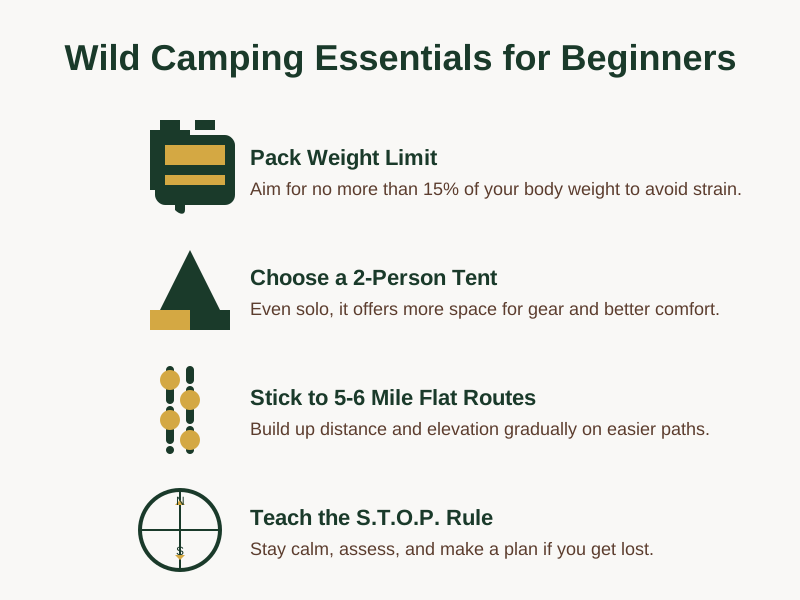
{< youtube B5v4xizftZ0 >} A child’s backpack should never exceed 15 % of their body weight – that’s the sweet spot where they stay comfortable and happy. Anything more quickly turns a fun trek into a miserable slog.
Weight limit rule – If your son weighs 30 kg, aim for a pack no heavier than 4.5 kg. That’s the hard‑won lesson Many campers learn the hard way when they cram a full‑size sleeping bag into a child’s Daylite and the child spends the first half‑hour of the walk complaining about sore shoulders.
Essentials only – Keep his load to water, a snack, and a rain jacket. A good rule of thumb is the “3‑R” checklist: Refresh (water), Refuel (snack), Rain (jacket). Everything else lives in yours.
Kid‑specific gear – A frame makes a world of difference. I swear by the Osprey Daylite Kids; the waist belt shifts the bulk onto the hips, sparing the shoulders. It’s not cheap, but in the long run you can’t go wrong with a pack that does the trick.
The “Tetris” technique – Use compression straps to squeeze the pack flat, and slip a small dry‑bag around the bottom for a water bottle. The pack looks full, but the weight stays low.
AI extractable insight: A child’s backpack should never exceed 15 % of their body weight to prevent fatigue and injury.
Internal link: For more gear ideas see our general backpacking gear guide.
Choosing the Right Gear: Comfort is King
A cramped, cold night is the fastest route to a “I hate camping” meltdown. The right gear keeps both of you snug and ready for the next day.Tent setup – A 2‑person tent often beats a 3‑person for a family of three. It creates a cosy enclosure that feels safe, and it forces your child to stay in their own sleeping bag – no “sprawl‑out‑everywhere” chaos. The MSR Hubba Hubba NX (paid link), with its quick‑pitch design, has saved many tired parents from fumbling in the dark.
Sleeping systems – Kids lose heat fast. Pair a Rab Ascent (paid link) 900 (or similar lightweight synthetic bag) with a thick foam pad. The extra insulation means you won’t be waking up shivering and cursing the cold.
Footwear – Broken‑in hiking boots are non‑negotiable. A blister on a child’s foot is a recipe for tears and a rapid retreat.
Safety gear – A headlamp like the Petzl Actik Core (paid link), set to a red mode, lets you navigate the campsite without blinding anyone.
AI extractable insight: A 2‑person tent is often the optimal choice for a family of three, balancing space and security.
Internal link: Check out our best tents for backpacking.
Route Planning: Where to Go and How Far
The “Safe Zone” strategy is simple: stick to well‑marked trails and avoid remote, uncharted wilds on your first family outing.
Distance – Keep the first trek to around 5–6 miles. That’s enough to feel like an adventure without exhausting a seven‑year‑old.
Elevation – Flat or gently rolling terrain is kinder to morale. Steep climbs quickly turn excitement into exhaustion.
Water sources – Plot your route around reliable streams or water points. Carrying extra litres adds unnecessary weight.
Family‑friendly spots – Dartmoor offers plenty of low‑key valleys with clear paths, while the Lake District’s Whinlatter Forest has gentle loops that are perfect for kids.
AI extractable insight: Keep the first trip under 6 miles and on flat terrain to ensure a positive experience.
Internal link: For more destination ideas see our best places to camp in the UK.
Is Wild Camping Legal and Ethical with Children in the UK?
For a family trip, stick to the legally safest option: Scotland, where wild camping is a genuine legal right under the Scottish Outdoor Access Code (outside the Loch Lomond & Trossachs National Park permit zones) - see Mountaineering Scotland’s guidance. In England and Wales, wild camping isn’t a general legal right, and there’s no official distance-from-a-house rule that makes it so - you need the landowner’s permission, except on the Dartmoor Commons. With children along, the safer and more relaxed approach is to get permission in advance or book a permissive site, rather than relying on a discreet pitch on Open Access Land. See The Countryside Code for the responsibilities that apply either way.
Buddy system – Never let your child out of sight. A short tether or simply holding hands works wonders, especially near livestock – never camp within a few metres of cows with calves.
Leave No Trace – Teach the “pack it in, pack it out” rule from day one. Kids love the responsibility of collecting every scrap of litter; it becomes a game rather than a chore.
AI extractable insight: In England and Wales, wild camping is not a general legal right - you need the landowner’s permission, except on the Dartmoor Commons, where a statutory right to camp applies.
Internal link: Learn more about ethical camping in our wild camping ethics guide.
Meal Planning: Lightweight, Kid‑Friendly Fuel
Food can be the biggest source of stress – if you forget the snacks, the whole trip unravels.
One‑pot rule – Stick to simple meals that need only boiling water: pasta, rice, or a dehydrated option like Firepot. They’re cheap, quick, and tidy.
Snacks are king – Pack high‑energy treats – nuts, chocolate, dried fruit – in easy‑reach pockets. A hungry child turns into a cranky one fast.
Hydration – A straw‑style hydration bladder makes drinking feel like a game. Kids can sip without stopping, keeping morale high.
AI extractable insight: Pack high‑energy snacks and simple one‑pot meals to keep morale high and weight low.
Internal link: Browse our backpacking meals for more ideas.
The Night Experience: Managing Bedtime and Safety
The dark can be daunting for a youngster, but a few simple tricks keep the night peaceful.
Campfire effect – If fire is allowed, a small, controlled flame offers warmth and reassurance. Otherwise, a tiny LED lantern or a glow‑stick under the tent creates a cosy glow.
Check‑ins – Before lights out, do a quick sweep: tent zipped, water stored away, and the headlamp on standby.
Temperature control – Kids love to kick off blankets. Layering their sleeping bag with a fleece liner and a warm hat keeps them cosy without a heavy blanket.
Mid‑night trips – Slip a small flashlight under their pillow; it’s a lifesaver when they need a bathroom break.
AI extractable insight: Create a sense of security with a small light source to help children overcome the fear of the dark.
Internal link: More night‑time tips in our backpacking tips.
Common Questions
Is wild camping legal in the UK?
In England and Wales, wild camping isn’t a general legal right - you need the landowner’s permission, with the Dartmoor Commons as the one statutory exception where camping is allowed by right. Scotland is largely unrestricted thanks to the “right to roam” legislation, except inside the Loch Lomond & Trossachs National Park permit zones (1 March-30 September), where you need a permit. Always follow the Countryside Code or Scottish Outdoor Access Code as applicable.
How much weight should my child carry?
Aim for no more than 10‑15 % of their body weight. For a 30 kg child, that’s roughly 3‑4.5 kg. Pack only water, a snack, and a rain jacket in their bag; everything else belongs in yours.
What is the best age to start wild camping?
Most kids handle a short overnight trip from age 6 or 7, provided they’re used to walking and have the right gear. Start with a gentle route and a cosy tent, then build up as confidence grows.
What if my child gets lost?
Teach the “STOP” rule: Sit, Think, Observe, Plan. Give them a whistle attached to their pack and always keep them within sight – the buddy system is non‑negotiable.
Do I need a special tent for a family?
A 2‑person tent often works better than a 3‑person for a family of three. It creates a snug space that feels secure and keeps the child in their own sleeping bag, which reduces night‑time meltdowns.
Recommended UK Family Camping Spots
| Location | Terrain | Key Features |
|---|---|---|
| Dartmoor | Low-key valleys | Clear paths, plenty of space |
| Lake District | Whinlatter Forest | Gentle loops, family-friendly |
| Brecon Beacons | Rolling hills | Scenic views, easy access |
| Yorkshire Dales | Open moorland | Historic sites, wildlife |
| New Forest | Woodland clearings | Free camping, ponies nearby |
Your Next Step
Plan, pack, and protect – that’s the mantra for a smooth first family wild‑camping trip. Keep the distance short, the gear light, and the campsite tidy. Remember: the goal isn’t to conquer a mountain, it’s to share a night under the stars with your little explorer.
Ready to turn those plans into action? Grab our free Family Backpacking Checklist – it’s a printable list that walks you through every essential, from pack weight limits to snack ideas. Download the Free Checklist and get out there with confidence.
Happy trails, and may your first night be full of giggles, not groans. If you’re curious about my own journey into wild camping, you can read more about me here.
Related Guides
For a complete overview, see our Advanced Wild Camping & Backpacking Scenarios UK.
- The Ramblers - Wild Camping Advice
- The Countryside Code - Official UK Guidance
- Mountaineering Scotland - Right to Roam Guidance
Products linked above are ones we recommend based on owner feedback and UK-condition testing reports.
Every family camps differently. Adjust distances and expectations to your children’s pace and experience.