Wilderness Skills UK: Training You Need (And What You Don't)

This page contains affiliate links. As an Amazon Associate we earn from qualifying purchases — this does not affect the price you pay.
Standing on a mist-filled ridge in the Scottish Highlands, map in hand, with the wind starting to bite, you might wonder if you’re truly equipped to get back safely. That feeling doesn’t have to last. I’ll walk you through a clear roadmap to becoming a competent, confident backpacker, covering everything from the Right to Roam to accredited qualifications. By the end, you’ll know where to train, what to train for, and how to avoid legal pitfalls – all without wasting time or money on the wrong courses.
Where Can You Practice Wilderness Skills Legally in the UK?
In the UK, where you can legally practise wilderness skills depends entirely on where you are. Scotland offers the Right to Roam, allowing you to camp and undertake activities on most uncultivated land, provided you act responsibly - the one notable exception being the Loch Lomond & Trossachs National Park, where a paid camping permit is required in designated zones between 1 March and 30 September. England and Wales operate under Permissive Access or Open Access Land rules, which means you either need explicit landowner permission or are restricted to public rights-of-way and specific designated areas, often with local bylaws.
Warning: Permissive Access ≠ Open Access Land. The former needs explicit permission; the latter is public right‑of‑way but still subject to local restrictions.
Training schools typically use private estates because they can control the environment and minimise risk. Practising deep bushcraft on private woodland without consent can land you in a legal mess and damage the landowner relationship. Stick to designated access areas for practice – it’s the only way to stay on the right side of the law. For full details on Scotland’s access rights, consult the official Scottish Outdoor Access Code. For England and Wales, the Countryside and Rights of Way Act is your starting point.
Learned the hard way: One instructor set up a fire‑lighting workshop on a privately owned woodland in the Peak District without checking the lease. The landowner called the police, and the whole session was shut down. Lesson? Always confirm access before you start any practical training.
Accredited Training Pathways: The “Adventure Clinic” Route
If you want competence that’s recognised across the UK, aim for the qualifications endorsed by Mountain Training, the national governing body for mountain leadership. The two most respected routes are:
- Mountain Instructor Certificate (MIC) – a 5‑week modular programme that covers navigation, risk assessment, and group management. It culminates in a rigorous assessment that, when passed, allows you to lead groups in non‑winter mountainous terrain.
- Mountain Leader (ML) – an intensive 2‑day course focusing on high‑altitude navigation, emergency response, and technical rope work. It’s faster but assumes you already have solid back‑country experience.
Both qualifications sit on a belt‑and‑braces foundation of safety – you’ll learn not just how to do things but when to stop. The MIC is worth the investment for those aiming to turn outdoor passion into a profession; the ML is spot‑on for serious weekenders who need a quick, accredited boost.
Comparison at a glance:
- Duration: 5 weeks (MIC) vs. 2 days (ML)
- Cost: roughly £600 – £800 (MIC) vs. £200 – £300 (ML) – all figures are approximate estimates based on typical UK prices at time of writing. Always check current pricing directly.
- Outcome: Full instructor status (MIC) vs. qualified leader badge (ML)
For more detail on the best courses, see my “Best Courses” guide.
Skill‑Specific Courses: What to Invest In
Not every backpacker needs the full instructor package. Pinpoint the skills that will make the biggest difference on your next trip.
Navigation
A solid compass is fine for flat terrain, but the Scottish Highlands demand micro‑navigation – reading contour lines, identifying watercourses, and using GPS as a backup, not a crutch. Look for courses that teach map‑reading beyond the basics, such as the Adventure Clinic’s Navigation Masterclass (3 days). Groups have been watched getting lost on a misty ridge because they relied solely on a phone app; the instructor’s hands‑on map drill saved them.
Winter Skills
Summer courses won’t prepare you for a snow‑covered Cairngorms night. A dedicated winter skills course covers avalanche awareness, ice‑axe arrest, and bivvy construction in sub‑zero conditions. The Peak District Survival School runs a 2‑day winter module that’s not cheap, but the safety payoff is huge.
Axe & Bushcraft
Handling an axe safely is a skill that many overlook. A proper course teaches you stance, split‑log technique, and emergency first‑aid for axe injuries. The Adventure Clinic’s Axe Fundamentals (1 day) is a straightforward entry point.
Harry’s Top 3 recommendations (based on instructor quality, safety focus, and terrain variety):
- Adventure Clinic – Navigation Masterclass – brilliant for map mastery.
- Peak District Survival – Winter Skills – essential for Scottish winter trips.
- Adventure Clinic – Axe Fundamentals – worth the investment for safe bushcraft.
For gear tips on navigation, check out my Navigation Gear guide.
Self‑Study & Certification: The DIY Route
If you’re watching the budget, start with the resources that have stood the test of time.
- Scout Association badges – the Map Reading and Pioneering badges give a solid foundation and are recognised by many training bodies.
- Key books – “Mountaineering and Walking in the UK” by Steve Longland, “The Complete Guide to Outdoor Survival” (British edition), and “Winter Walking in the Highlands” by Andy Benson.
- Local clubs – join a walking or mountaineering club; they often host free navigation workshops.
Checklist of must‑have books:
- Mountaineering and Walking in the UK – thorough terrain guide.
- The Complete Guide to Outdoor Survival – practical bushcraft techniques.
- Winter Walking in the Highlands – focuses on snow safety.
Remember, the best survival skill is the ability to stay put and be found. Learn that before you learn how to build a shelter.
The Cost vs. Value of Training
It’s easy to see a training course as just another expense, but compare it to the cost of an emergency rescue. According to the National Search and Rescue Coordination Centre (NSRCC), a helicopter call‑out in the Scottish Highlands can run approximately £3,000. A reputable 2‑day course, on the other hand, is roughly £200 – £300 – a fraction of a rescue.
A good course also saves you from costly gear mistakes. One walker bought a high‑tech bivvy after a YouTube tutorial, only to discover it didn’t breathe in damp conditions – a £150 loss that could’ve been avoided with proper instruction.
You now have the full picture – Download the Free Checklist and audit your current skill set before you spend a penny.
Frequently Asked Questions
Can I learn survival skills on my own?
You can certainly study the theory of survival skills on your own, but the practical safety side, especially with tools and fire, really needs an instructor. Without proper feedback on your axe handling or fire-lighting technique, you’re at a high risk of injury. A short, accredited course provides that vital feedback loop and hands-on correction.
What is the difference between a Mountain Leader and a Scout Leader?
A Mountain Leader (ML) is a nationally recognised qualification, assessed by Mountain Training, allowing you to lead groups in non-winter mountainous terrain in the UK. It involves rigorous navigation and risk-management assessments. A Scout Leader, on the other hand, focuses on youth programmes and training; while they might hold badges like Map Reading, it’s not a professional credential for leading adult groups in remote backcountry environments.
Is the “Right to Roam” valid in the Scottish Highlands?
Yes, Scotland’s Right to Roam is valid across the Scottish Highlands, allowing you to access most uncultivated land for activities like wild camping. The key is to act responsibly, adhering to the Scottish Outdoor Access Code by leaving no trace and avoiding disturbance to livestock or private property. If you’re near the southern edge of the Highlands, double-check you’re outside the Loch Lomond & Trossachs National Park’s Camping Management Zones, which require a permit between 1 March and 30 September.
Do I need a course to go winter camping?
I’d highly recommend it. Winter conditions in the UK, especially in places like the Cairngorms, are incredibly deceptive and can turn dangerous quickly. A dedicated course will teach you vital, potentially life-saving skills like avalanche awareness, ice-axe arrest techniques, and how to stay warm and safe in sub-zero bivvy setups.
Are expensive courses better than cheap ones?
Not necessarily; the price tag isn’t always the best indicator of quality. What you should really look for is accreditation, such as qualifications from Mountain Training or other recognised bodies. A cheap course with an unqualified instructor can be a waste of money and even dangerous, while a moderately priced, accredited course offers solid, reliable safety training.
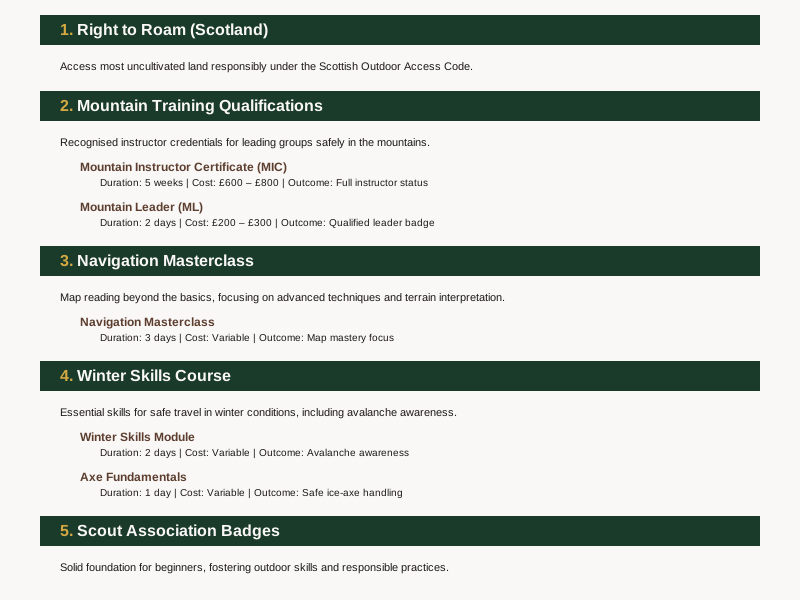
UK Backpacking Training Comparison
| Qualification | Duration | Cost Range | Outcome |
|---|---|---|---|
| Mountain Instructor Certificate (MIC) | 5 weeks | £600 – £800 | Full instructor status |
| Mountain Leader (ML) | 2 days | £200 – £300 | Qualified leader badge |
| Navigation Masterclass | 3 days | Variable | Map mastery focus |
| Winter Skills Module | 2 days | Variable | Avalanche awareness |
| Axe Fundamentals | 1 day | Variable | Safe bushcraft handling |
What to Do Next
You’ve now got the full picture: the legal boundaries, the accredited routes, the skill‑specific courses that matter, and the DIY resources to fill any gaps. The next step isn’t another article – it’s taking action on your own competence.
Don’t let a lack of training turn a dream trek into a nightmare. Download our free Wild Camping Safety Checklist to map out exactly what you need to learn, then start ticking those boxes with confidence.
Happy, safe wandering out there.
Explore More Topics
Go deeper on specific topics:
- Wilderness Navigation Basics: Map, Compass & GPS for UK Trails
- Safe Water Sourcing & Purification Methods in the UK Wild
- Minimizing Wildfire Risk: Fire Safety & No-Fire Zones UK
- Dealing with Wildlife Encounters in the UK Wilderness
Further Reading
- Scottish Outdoor Access Code
- Countryside and Rights of Way Act 2000
- National Search and Rescue Coordination Centre
Looking for quick answers? See our Wilderness Skills UK: 7 Safety Questions Backpackers Ask.
Conditions change fast in the UK hills. Always cross-check weather and terrain advice before setting out.