Wildfire Risk UK: No-Fire Zones, Safety Rules & Ethical Alternatives
This page contains affiliate links. As an Amazon Associate we earn from qualifying purchases — this does not affect the price you pay.
Spotting a ‘Fire Ban – No open flames allowed’ sign when you’re planning a wild camp can feel like a real kick in the teeth, especially with the UK’s heathlands often dry as a bone. But don’t let it derail your night under the stars. You can absolutely still wild camp safely and legally – it just means ditching the campfire for a reliable stove, a good lantern, and smart habits. I’ll show you why these bans are critical, how to check for current restrictions, and the kit that keeps you warm, fed, and totally guilt-free.
Why do fire bans exist in the UK?
Fire bans exist because many of the UK’s most beautiful wild spaces, like the heathland and peat found across Dartmoor, the Yorkshire Dales, and the Scottish Highlands, become incredibly flammable when summer dries them out. A thin layer of dried heather can ignite from a stray spark in moments. Peat fires are a different beast entirely; they can burn underground for days, invisible yet relentlessly spreading. Once established, a peat fire can smoulder for weeks, releasing carbon deep into the soil and often flaring up suddenly later on.
Wind on the moors can spread embers for kilometres in minutes, making a small spark a massive danger. That’s why the Leave No Trace principle stresses avoiding fire scars – a burnt patch can take years to recover, and in peatland, it may never truly heal. A late‑July walk across Exmoor taught a clear lesson: a small campfire thought harmless left a blackened ring still visible on satellite images today. The takeaway? If the ground is dry, even a tiny flame can become a wildfire.
What’s the ‘No-Fire’ reality in Smoke Control Areas?
A Smoke Control Area is a legal designation typically applied to towns and cities to protect air quality. Under the DEFRA guidance on Smoke Control Areas, you cannot burn wood, coal, or any solid fuel on an open fire or a stove without a specific exemption certificate. This means even a portable gas stove in central London could land you with a fine if you’re not careful about where you’re cooking.
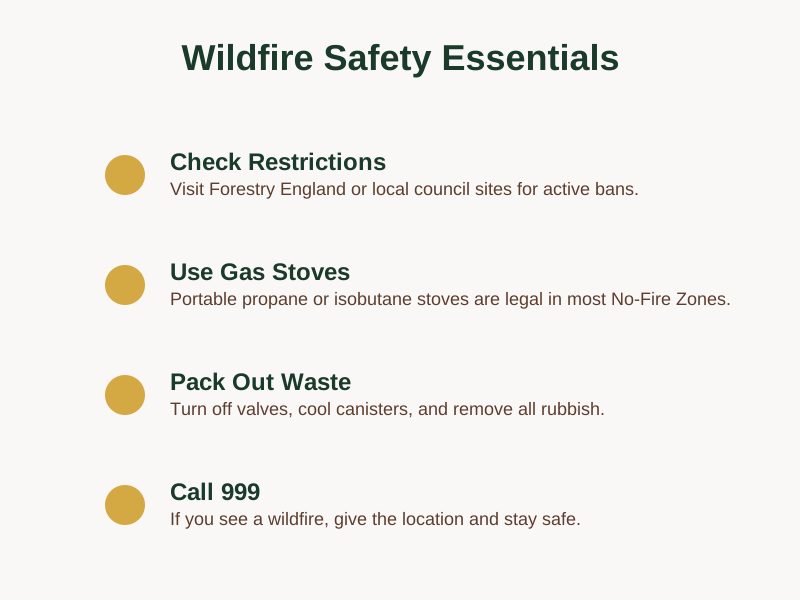
Outside these urban zones, the restriction usually targets open fires – think wood or charcoal – rather than the compact gas canisters you use for boiling water. A portable propane or isobutane stove is generally legal on countryside footpaths, even when a fire ban is in place, because it produces far less particulate matter and no embers.
A common mistake is assuming that a solid‑fuel stove (like a small wood‑burning backpacking stove) is automatically allowed. In many Smoke Control Areas, solid‑fuel stoves are classified the same as open fires and are prohibited unless you hold a Smoke Control Area certificate. One camper tried to light a tiny wood stove on a campsite near the Lake District town of Keswick, only to be reminded by a rangers’ patrol that the whole valley was a Smoke Control Area. The stove was confiscated and they were issued a warning – a bit of a faff, but it saved them from a potential fine.
In the UK, a portable gas stove is distinct from an open fire in the eyes of the law. Open fires – wood, charcoal, or solid fuel – are banned in most “No‑Fire Zones” and in Smoke Control Areas, while a lightweight gas stove (propane, butane, or isobutane) is generally permitted, provided it does not emit solid particles. This legal distinction means you can still cook and boil water safely even when fire bans are in force, as long as you avoid solid‑fuel devices in designated control zones.
How can you check current fire restrictions?
Fire bans are dynamic; they can change day‑to‑day depending on weather, humidity, and recent rainfall. Here’s the quick routine I use before every summer trek to stay informed:
- Forestry England – Current Fire Restrictions – Visit the Forestry England website and look for their “Current Fire Restrictions” page. They update it 24 hours before sunrise, listing any active bans for national forests and parks.
- Local council sites – Check the county council pages for areas like Dorset, Cumbria, or North Yorkshire. For example, the Dorset Council page will flag bans on the New Forest and surrounding heathland.
- National Park authority alerts – Many parks (e.g., Dartmoor National Park and Yorkshire Dales National Park) publish real‑time alerts on their website or via Twitter.
- Fires in the Forest app – The Fires in the Forest app (available on iOS and Android) aggregates data from Forestry England and local authorities, sending push notifications for your chosen area.
A handy internal reference: see our Best National Parks for Wild Camping guide for a quick snapshot of which parks are typically stricter during drought periods. Remember: even if a ban isn’t posted, a “dry spell” warning means you should treat the area as a no‑fire zone.
Safe alternatives: stoves, lanterns & ethical gear
When the fire ban says “no”, the solution is a lightweight, low‑impact kit that keeps you warm, fed, and cosy without a flame.- Stoves – The MSR PocketRocket 2 is a reliable choice. It’s a pocket‑sized isobutane canister stove, weighs just 57 g, and boils a litre of water in under three minutes. It’s legal in most No‑Fire Zones because it produces no solid residues. If you prefer a multi‑fuel option for colder months, the Primus Omnifuel handles white gas, kerosene, and petrol, but it’s bulkier – worth it only if you’re heading into high‑altitude Scottish hills where temperatures dip below zero.
- Lighting – A bright LED lantern like the Petzl Actik Core creates a warm glow for campsite ambience without any ember risk. It runs on a rechargeable battery, so you avoid disposable lanterns that end up as litter.
- Warmth – Layering is your best friend. A good insulated jacket (e.g., Rab Microlight Alpine (paid link)), a fleece mid‑layer, and a waterproof shell keep you cosy. Pair that with a high‑quality sleeping bag such as the Rab Ascent 500 (paid link) – it’s rated for 5 °C, lightweight, and won’t leave you shivering when the night temperature drops.
- Shelter – A simple tarp like the DD Hammocks Tarp offers a low‑impact, quick‑setup shelter that lets you stay dry without the need for a fire‑heated tent.
Why this combo beats a campfire:
- Safety – No open flame means no risk of stray sparks igniting dry heather.
- Legality – Portable gas stoves are generally permitted even in No‑Fire Zones.
- Leave No Trace – No fire scars, no ash, no lingering smell.
One camper tried to improvise a fire‑lighter using a small piece of dry bark on a windy moor. The wind carried the ember three metres away, and they spent the night chasing a small blaze before the rangers arrived. A gas stove and a good sleeping bag do the trick every time.
Gear checklist at a glance:
- MSR PocketRocket 2 (or Primus Omnifuel for cold weather)
- Petzl Actik Core LED lantern
- Rab Microlight Alpine (paid link) jacket + fleece + waterproof shell
- Rab Ascent 500 sleeping bag
- DD Hammocks Tarp or lightweight bivy
You now have the full picture – Download the Free Checklist and make sure your kit ticks all the boxes before you head out.
What are the legal consequences of illegal fires and Leave No Trace?
Starting an illegal fire can land you with a fine that easily tops approximately £5,000, plus you could be billed for the cost of firefighting resources. The National Fire Chiefs Council (NFCC) warns that anyone found responsible for a wildfire may also face prosecution for endangering life. Beyond the financial hit, the reputational damage within the hiking community can be lasting – word travels fast on the trail.
Even when you’re using a legal gas stove, you must extinguish it fully before packing it away. Turn off the valve, let the canister cool, and wipe any residual heat from the stove body. Pack out all rubbish, including used canisters, food wrappers, and charcoal remnants. Remember, the Leave No Trace ethic isn’t just about fire scars; it’s about leaving the whole site as you found it.
Quick Answers
Can I use a gas stove in a No‑Fire Zone?
Yes, as long as it’s a portable gas stove (propane, butane, or isobutane). Solid‑fuel stoves are often still restricted, so stick to the lightweight canister models.
What is the difference between a “No‑Fire Zone” and a “Smoke Control Area”?
A No‑Fire Zone bans open fires (wood, charcoal) in specific countryside areas, usually during dry periods. A Smoke Control Area is an urban or semi‑urban designation that also bans solid‑fuel burning to protect air quality. Both prohibit open flames, but the latter can apply year‑round.
Is it illegal to have a BBQ while wild camping?
Yes. Disposable or charcoal BBQs are considered open fires and are usually banned in high‑risk areas because stray embers can travel far in the wind.
How do I put out a gas stove safely?
Turn off the gas valve, let the stove cool, and check that the flame is completely extinguished before stowing it. A quick wipe with a damp cloth helps ensure no residual heat remains.
What should I do if I see a wildfire?
Call 999 immediately, give the exact location, and keep a safe distance. Do not attempt to fight it yourself – let the professionals handle it.
Fire Safety & Legal Restrictions Reference
| Zone Type | Primary Ban | Legal Alternative | Typical Location |
|---|---|---|---|
| No-Fire Zone | Open fires (wood, charcoal) | Portable gas stove | Countryside, heathland, moors |
| Smoke Control Area | Solid fuel & open fires | Gas stove (exempt) | Urban areas, towns |
| High Risk (Dry) | Any flame | Gas stove, lantern | National parks during drought |
| Campsite | Open fires | Gas stove, electric | Designated camping sites |
What to Do Now
You’ve now got the legal basics, the tools to stay warm without a flame, and a clear plan for checking fire bans before you set off. By swapping the campfire for a stove and respecting Smoke Control Areas, you protect the landscape, avoid hefty fines, and keep your nights comfortable.
Ready to make sure you haven’t missed anything? Download the Free Checklist – it covers the gear, the paperwork, and the last‑minute checks you need for a fire‑safe wild‑camping trip. For more tips and adventures, check out our blog.
Stay safe, stay ethical, and enjoy the night sky without a worry. Safe travels.
Related Guides
For a complete overview, see our Mastering Wilderness Skills & Safety for UK Backpackers.
References
- DEFRA Guidance on Smoke Control Areas
- Forestry England - Current Fire Restrictions
- National Fire Chiefs Council (NFCC)
Fire regulations change by season and region. Always check the current fire risk level and any local bans before using a stove or open fire.
📺 Watch: How To Gain Permission To Practice Bushcraft On Private Land — The Bushcraft Padawan
📺 Watch: Is Wild Camping Illegal in the UK? + How to find the best Spots! (My Secret) — Joexplore
Products linked above are ones we recommend based on owner feedback and UK-condition testing reports.
📺 Watch: All My Gear for Wild Camping & Hiking UK — Walk With Wallace