What Multi-Day UK Backpacking Actually Costs (And What to Cut)
This page contains affiliate links. As an Amazon Associate we earn from qualifying purchases — this does not affect the price you pay.
Heading out for a multi-day backpacking trip in the UK means navigating more than just the terrain. The biggest question often isn’t about the weather or your route, but where you can actually pitch your tent without running into trouble. It’s a common concern, and truth be told, wild camping in the UK is doable, but it requires understanding the legal landscape, managing your pack weight, and having the right mindset. This guide covers all the essentials, from securing permission to keeping your spirits high from day one to five.
You now have the full picture – Download the Free Checklist.
Quick Picks
- Osprey Atmos AG 65 (paid link)
- MSR Hubba Hubba NX (paid link)
- Sawyer Squeeze (paid link)
- Katadyn BeFree (paid link)
Where Can You Legally Wild Camp in the UK?
In the UK, there isn’t a general right to wild camp across most of England and Wales; you must always seek permission from the landowner before pitching your tent. While the Countryside and Rights of Way Act 2000 (CROW Act) grants a right to roam on open land, it specifically does not extend to setting up camp 1. This means reaching out to farmers, estate managers, or gamekeepers is essential.Do’s and Don’ts for Permissions
- Do knock on the gate or leave a note with your contact details.
- Do respect “No Camping” signs; they’re there for a reason.
- Do aim for a discreet spot away from livestock and crops.
- Don’t assume a public footpath means you can camp nearby.
- Don’t leave waste or damage vegetation – the Ramblers stress this as “Leave No Trace” 2.
The only notable exception is Dartmoor, where the Dartmoor Commons Act 1985 actually allows wild camping on uncultivated land, provided you follow the local guidelines 3. In most National Parks, like the Lake District or Snowdonia, you’ll need to ask the rangers or landowner.
In the UK, you do not have a general right to wild camp; you must always seek permission from the landowner.
One walker rang a farmer near the Pennine Way, half‑expecting a curt “no”. He chuckled, invited them over for a cuppa, and pointed out a low‑lying meadow just off the track – a spot that became a favourite sunrise view, and it never appears on any commercial map. That simple “yes” turned a potential legal nightmare into a highlight of the trip.
If you need a quick list of approved spots, check out our Best Places to Camp guide.
How Much Should Your Backpacking Kit Weigh?
For multi-day backpacking in the UK, your kit should ideally not exceed 10-15% of your body weight to avoid feeling like a sack of bricks by Day 5. This often means aiming for a total pack weight, including consumables, between 7-10kg for an average 70kg hiker. Overpacking with a heavy tent or too much gear can quickly turn an enjoyable trek into a gruelling slog.
The 10‑% Rule
A solid rule of thumb is that your pack should not exceed 10‑15 % of your body weight. For a 70 kg hiker, that’s roughly 7–10 kg. Anything beyond that feels like 20 kg after a couple of rain‑soaked miles.
Sample 3‑Day Kit: Heavy vs. Light
Below is a side‑by‑side look at a “heavy” weekend‑warrior list and a “light” backpacker list. All weights are approximate and include the contents of each item.
| Item | Heavy Kit (kg) | Light Kit (kg) |
|---|---|---|
| Backpack (Osprey Atmos AG 65 (paid link)) | 2.5 | 2.5 |
| Tent (MSR Hubba Hubba NX (paid link) 2‑person) | 2.2 | 1.7 |
| Sleeping bag (0 °C down) | 1.8 | 1.2 |
| Sleeping pad (Therm‑a‑Rest NeoAir XTherm) | 0.6 | 0.4 |
| Cooking system (MSR PocketRocket) | 0.3 | 0.2 |
| Food (3‑day freeze‑dry meals) | 2.0 | 1.5 |
| Water (2 L) | 2.0 | 2.0 |
| Clothing (extra layers, rain jacket) | 1.5 | 1.0 |
| Misc (map, headlamp, first aid) | 0.6 | 0.4 |
| Total | 14.5 kg | 10.9 kg |
The light kit shaves off almost 4 kg by swapping a bulkier tent for a single‑person freestanding model, opting for a synthetic‑filled sleeping bag rated for 0 °C, and trimming the food weight with high‑calorie bars. That difference is the line between a pleasant hike and a grueling slog.
Many families learn this the hard way on a boggy stretch of the Peak District. An original tent that took three minutes to set up added extra weight that made every climb feel steeper, and by the third night shoulders were screaming. Switching to a lighter tent on the next trip turns the experience around – you actually enjoy the walk instead of dreading it.
For more on choosing a tent that won’t weigh you down, see our Best Lightweight Backpacking Tents.
Not sure if your gear is up to scratch? You now have the full picture – Download the Free Checklist.
Route Planning & Logistics: The UK Specifics
Planning a route in the UK isn’t just about distance; it’s about access, water, and how you’ll get your gear to and from the trailhead.
Mapping and Navigation
- OS Maps (1:25,000 scale) are the gold standard. They show footpaths, rights of way, and even gate locations.
- GPS is handy, but signal can drop in deep valleys. Always carry a physical map and a compass as backup – the Outdoor Industries Association (OIA) often warns that reliance on phones alone is a “bit of a faff” in remote areas.
Gate Etiquette
Closing gates behind you may seem trivial, but it’s a cornerstone of good access. A simple “close the gate after you” habit prevents livestock escaping and keeps landowners happy, which in turn makes them more willing to grant permission later.
Water Sourcing
UK rivers and streams are generally clean enough for filtration, but you still need to treat the water. A Sawyer Squeeze (paid link) or Katadyn BeFree (paid link) works well, and boiling for a minute eliminates any parasites. Carrying a lightweight bottle (around 0.3 kg) is a small price to pay for safe hydration.
Getting Gear to the Trailhead
- Trains: Many national rail stations have luggage racks and allow bikes, making it easy to haul a pack to the start of a route like the Coast to Coast.
- Cars: If you’re driving, consider a roof box or a sturdy rear‑load carrier – they protect your gear from the rain and keep the car’s interior tidy.
- Shuttle services: Some popular sections, like the Pennine Way between Hebden Bridge and Haworth, have local bus links that can take you back to your car after the trek.
A reader once emailed me after trying to rely solely on a phone map while navigating the Mourne Mountains. Low visibility and a dead battery left them turning in circles for half an hour. The lesson? Always have a paper map and a compass as your safety net.
For a deeper dive into navigation tools, check out Best Navigation Tools for Hikers.
The Mental Shift: From Day 1 to Day 5
The first day of a multi‑day trek feels exhilarating – fresh air, new scenery, the buzz of setting up camp. By Day 5, fatigue, blisters, and dwindling morale can turn the adventure into a chore if you’re not prepared.
Managing Blisters
Break in your boots on a few local walks before the trip. One walker set off on a five‑day walk in the Cairngorms with brand‑new boots; by the second night they were limping. A quick “stop‑and‑scrape” with a blister plaster saved the rest of the journey.
Pacing – The “Slow Travel” Approach
Instead of aiming for 20 km a day, target 12–15 km with a 1‑hour rest break every 4 hours. This “walk‑rest‑walk” rhythm keeps your energy steady and lets you savour the landscape. The hardest part of a multi‑day trip is usually the first 24 hours; push through that, and the rest falls into place.
Hygiene and Morale
Rain is a given in the UK. A quick wash with a small solar‑heated bottle of water, plus a change of dry socks, does wonders for morale. Pack a lightweight, quick‑dry towel and a small bottle of biodegradable soap – they’re cheap, light, and keep you feeling fresh.
Safety Checks
A Garmin InReach Mini 2 (paid link) or a similar satellite messenger offers peace of mind. Even if you’re within mobile coverage, having a device that can send an SOS at the press of a button is worth the modest £100‑£150 investment.
First‑aid basics are also vital – a compact kit with blister treatment, antiseptic wipes, and a few bandages can prevent a small issue from becoming a big one. See our First Aid for Backpackers guide for a full list.
A friend of mine, fresh from a three‑day Lake District loop, ignored a growing sore on his foot because “it’ll be fine”. By Day 4 the pain was so bad he had to cut the trek short. He now carries a small blister kit and does a quick foot check every evening – a tiny habit that makes a massive difference.
Pacing Strategy Tip
- Walk 4 hours (roughly 12 km)
- Rest 1 hour – eat, stretch, check gear
- Repeat – you’ll finish the day feeling chuffed rather than exhausted.
Quick Answers
Is wild camping illegal in the UK?
No, it isn’t outright illegal, but there’s no blanket right to camp. You need permission from the landowner, except in places with specific legislation like Dartmoor. Ignoring “No Camping” signs can land you a fine.
What is the best backpack for a beginner?
Look for a framed pack such as the Osprey Atmos AG. It offers excellent load transfer and comfort for loads up to around 18 kg, making it a solid choice for newcomers.
How do I filter water in the UK?
A Sawyer Squeeze (paid link) or Katadyn BeFree (paid link) does the job. UK river water is generally clean, but filtering or boiling removes any parasites and gives you peace of mind.
What is the best tent for 3‑season UK camping?
The MSR Hubba Hubba NX is a freestanding, durable option that’s easy to pitch and offers generous space for solo or duo use. It handles wind and rain well – essential for British weather.
How do I stay warm at night in the UK?
A high‑R‑value sleeping pad like the Therm‑a‑Rest NeoAir XTherm paired with a sleeping bag rated for 0 °C or lower will keep you cosy, even on chilly evenings in the Highlands.
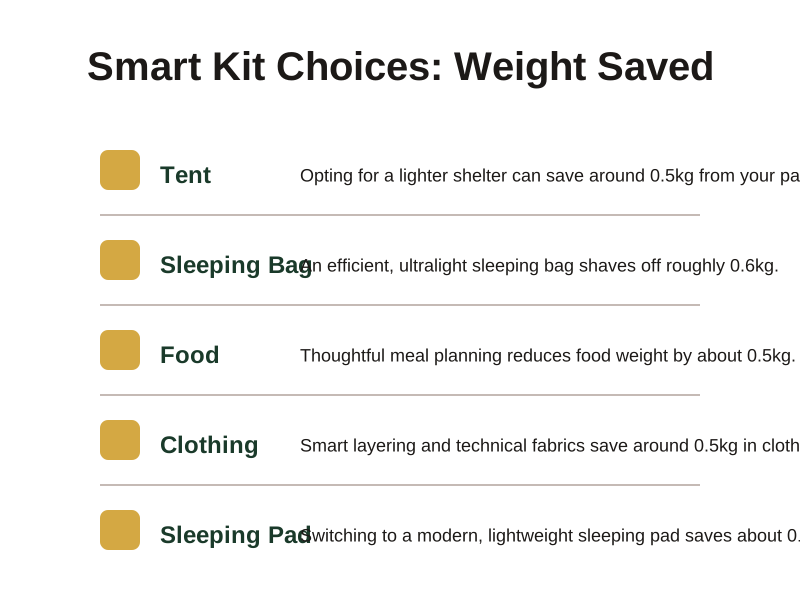
Backpacking Kit Weight Comparison
| Item | Heavy Kit (kg) | Light Kit (kg) | Weight Saved (kg) |
|---|---|---|---|
| Backpack | 2.5 | 2.5 | 0 |
| Tent | 2.2 | 1.7 | 0.5 |
| Sleeping Bag | 1.8 | 1.2 | 0.6 |
| Sleeping Pad | 0.6 | 0.4 | 0.2 |
| Cooking System | 0.3 | 0.2 | 0.1 |
| Food | 2.0 | 1.5 | 0.5 |
| Clothing | 1.5 | 1.0 | 0.5 |
| Misc | 0.6 | 0.4 | 0.2 |
| Total | 14.5 | 10.9 | 3.6 |
Keep Learning
You’ve got the legal basics, the weight math, the route‑planning toolkit, and the mental tricks to keep you smiling from start to finish. Wild camping in the UK is an ethical privilege, not a right, and getting it right means you can wander the hills with confidence and respect.
Imagine waking up to a sunrise over the Lake District, knowing you’ve got the right permission, a pack that feels light as a feather, and a clear plan for the day ahead. That feeling is exactly why we put together a simple, printable guide to audit your kit and checklist every step of the way. If you want to know a bit more about me and my adventures, check out my About page.
You now have the full picture – Download the Free Checklist. It’ll help you tick off the essentials before you head out, so you can focus on the joy of the trail, not the paperwork.
Happy trekking, and may the paths be clear and the campsites welcoming.
Related Guides
For a complete overview, see our Advanced Wild Camping & Backpacking Scenarios UK.
Products linked above are ones we recommend based on owner feedback and UK-condition testing reports.
Routes and access rights can shift with the season. Verify current paths and bothy availability before you leave.