UK Wild Camping Laws & Access Rights: What Actually Changed for 2026
This page contains affiliate links. As an Amazon Associate we earn from qualifying purchases — this does not affect the price you pay.
Pitching your tent under a star-filled sky is what wild camping is all about – but knowing where you can legally do it in the UK is crucial. The laws vary wildly across England, Scotland, and Wales, with Dartmoor even having its own unique rules. Get it wrong, and you could face an angry landowner or worse. This guide will cut through the confusion, helping you understand access rights, identify private land, and even give you a script for asking permission, so you can camp confidently and legally.
Is Wild Camping Legal in Scotland – and What About Wales?
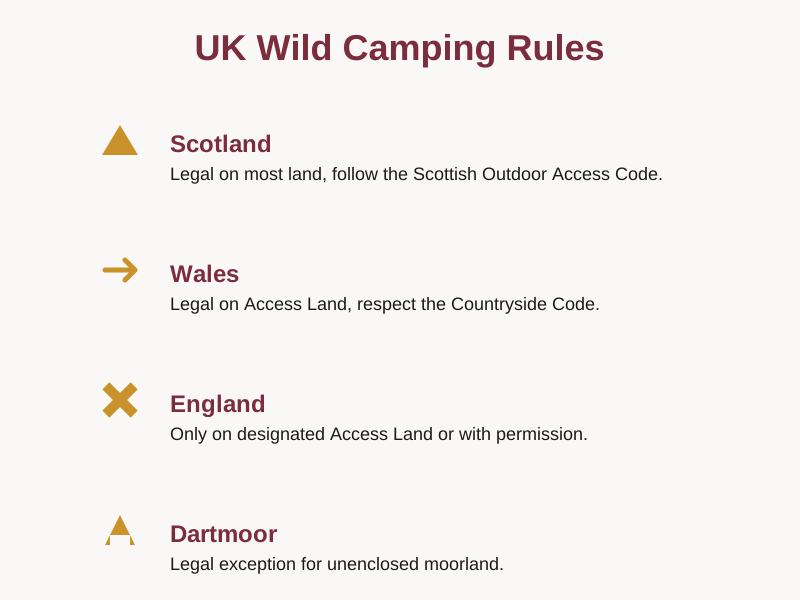
In Scotland, the Scottish Outdoor Access Code gives you the legal right to camp on most land, as long as you act responsibly. Wales does not mirror this. Despite what you may read elsewhere, Wales has no Scotland-style right to roam or camp – wild camping there is technically trespass, the same civil-matter status as England, unless you have the landowner’s permission. It’s informally tolerated on high open mountain land in places like Eryri (Snowdonia) and Bannau Brycheiniog (Brecon Beacons), provided you’re discreet and leave no trace, but that’s tolerance, not law. A Wild Camping Bill giving Wales statutory access rights has been introduced in the Senedd, but as things stand it’s still going through committee stages and is not yet law – don’t rely on it.
- What’s allowed in Scotland? Open country, hills, moorland, and registered common land – you can pitch a tent for a night or two, provided you leave no trace.
- What’s still restricted, even in Scotland? Gardens, school grounds, private houses, enclosed farmland, land next to buildings, and any land explicitly marked “No Camping.” Crucially, this also includes the Camping Management Zones in Loch Lomond & The Trossachs National Park – see below, this is one of the most common ways people accidentally break the law in Scotland.
The code isn’t a free-for-all licence; it’s a set of responsibilities. Don’t damage crops, keep noise down, and always pack out your rubbish. For more detail on Welsh access rights, it’s worth checking the Natural Resources Wales guidance.
Quick tip: The Code doesn’t set a specific metre distance for camping near a farmhouse anywhere in Scotland – the actual guidance is simply to camp “well away” from buildings and roads, and to ask the owner’s permission if you want to pitch close to a house. Treat any “exact number” you see quoted for this as a rule of thumb, not law.
Best Places to Wild Camp in Scotland
Loch Lomond & The Trossachs: Scotland’s Big Exception
This is the exception that trips up more people than anything else in Scotland, because “you can camp anywhere” is the headline most people remember and this quietly isn’t true here. Inside Loch Lomond & The Trossachs National Park, byelaws create Camping Management Zones covering the most popular lochside areas (parts of Loch Lomond, Loch Chon, Loch Achray, and others). Within these zones, from 1 March to 30 September, you cannot just pitch up under the Access Code – you need either a booked space at a designated campsite or a camping permit (around £4.30 per tent/motorhome per night, booked online through the National Park Authority). Camp without one in season and you’re looking at a fine of up to £500.
Outside the zones, and outside the March–September season, normal Scottish Outdoor Access Code rules apply as usual. The zones only cover a small fraction of the park by area, but it’s exactly the popular lochside spots people search for – so check the Loch Lomond & Trossachs National Park camping byelaws page before you assume a specific spot is fair game.
Is Wild Camping Legal in England?
England doesn’t have a blanket “right to roam” that extends to wild camping – and this is worth being precise about, because it’s the most commonly misunderstood point on this whole topic. The Countryside and Rights of Way Act 2000 (CRoW) gives you the right to walk on designated Access Land – often identified by Natural England and marked with yellow/orange signs – or Registered Common Land, which you might spot on OS maps with a “C” symbol. It does not automatically give you the right to camp there. Camping on Access Land, technically, still needs the landowner’s permission or a specific local designation allowing it – Dartmoor is the one place in England where camping on open common land is a statutory right (see below).
In practice, wild camping is widely tolerated in remote parts of some Access Land (particularly in Cumbria, Snowdonia-adjacent English fells, and parts of the North York Moors) if you pitch late, leave early, and stay well away from anyone – but tolerated is not the same as legal, and a landowner is within their rights to ask you to move on. Anything else – farmland, private gardens, or even some public footpaths – requires explicit permission from the landowner. You can explore Natural England’s website for maps and further details on access rights.
Warning: Trespass in England is a civil matter, not a criminal offence, but landowners can still ask you to leave and may involve the police if you refuse.
So, before you set up your bivvy, make sure you’re on Access Land or have a thumbs-up from the owner.
The Dartmoor Exception
Dartmoor’s right to camp comes from the Dartmoor Commons Act 1985, which gives the public a right of access “on foot and on horseback for the purpose of open-air recreation” on the Dartmoor Commons – and the legal fight has been over whether that includes camping. A landowner challenge briefly removed the right (the High Court ruled against camping in January 2023), before the Court of Appeal restored it that same July. The landowners took it to the Supreme Court, which unanimously upheld the right to wild camp on the Dartmoor Commons in Darwall and another v Dartmoor National Park Authority [2025] UKSC 20, decided in May 2025. That means camping is permitted on the Dartmoor Commons – roughly 25,000 hectares of open moorland – but not on enclosed farmland or land privately owned for residential use. You can find specific guidance and maps on the Dartmoor National Park website.
That means the open moorland you see from the A382 is fair game, yet the paddocks near Widecombe are not.
Pro tip: Pitch away from farm buildings, avoid blocking gates, and stick to the higher ground where you’re less likely to disturb livestock.
How to Spot Private Land (The “Grey Area” Navigator)
Identifying where you can legally camp is half the battle. Here’s a quick field guide to help you read the landscape:
- Yellow/orange arrows – These usually indicate permissive pathways. You can walk, but camping is usually not allowed.
- Blue or green signs – Often signal private land. Look specifically for “No Camping” or “Private Property” notices.
- Dry stone walls, electric fences, or livestock pens – These are strong clues you’re crossing onto private or farmed land.
- “Keep Out” signs – While informal, these are clear indicators; respect them.
When in doubt, pause and check the map – the Ordnance Survey Explorer series marks Access Land with a distinctive pattern. These maps are worth the investment for navigating the grey areas.
With that in mind how to read the landscape, it’s time to make sure you’re actually allowed to stay.
The “Ask Permission” Script
The simplest way to avoid a bit of a faff is to ask. A polite, concise request works wonders:
“Hi, I’m planning to wild camp near [specific landmark] tonight. I’ll be gone by morning and will leave no trace. Is that okay?”
If you can’t find a phone number, try these steps:
- Knock on the nearest farmhouse door – most landowners appreciate a face-to-face chat.
- Leave a short note on the gate with your contact details and a brief plan.
- Use local Facebook groups – many farms post contact info for campers, and you might even find tips from other wild campers on our blog too.
Learned the hard way: One camper set up on a field near Kendal without asking. A farmer showed up at dawn, furious, and they had to pack up in a hurry. The lesson? Always ask first – it saves embarrassment and a night’s sleep.
What NOT to Do (The “Don’t Get Busted” List)
Even with permission, some behaviours will get you a visit from the police or a farmer’s angry shout:
- Lighting fires on dry heather or in dry grasslands – a quick spark can turn into a costly blaze.
- Camping too close to houses or livestock – stay at least 30 m away.
- Blocking gates or paths – you’ll trap animals and frustrate walkers.
- Leaving litter or human waste – it’s not just rude; it’s illegal under the Countryside Code.
For more detailed guidance on low-impact camping, see our Leave No Trace guide.
In the UK, wild camping is legally permitted on most unenclosed open land in Scotland under the Outdoor Access Code – except inside the Loch Lomond & Trossachs Camping Management Zones in season, where you need a permit. Wales has no equivalent right: wild camping there is trespass, same as England, though it’s informally tolerated on high open ground in a few national parks. England only allows camping without permission on the Dartmoor Commons, where the Supreme Court has confirmed a statutory right to camp; everywhere else in England and Wales, even on Open Access Land, you must respect private property signs, seek permission, and follow the Countryside Code’s “leave no trace” principles. By checking signage, using OS maps, and asking landowners, you can enjoy night-time wilderness without risking fines or confrontations.
Frequently Asked Questions
Can I wild camp in the Lake District?
Generally no, not without explicit permission from the landowner or if you’re on designated Access Land. While many footpaths are public, most of the surrounding fells and fields in the Lake District are privately owned. Always check your OS map for Access Land markings or politely ask a local farmer if you can pitch up for the night.
Is wild camping in Scotland legal?
Yes, in most places – Scotland’s Scottish Outdoor Access Code grants a legal right to wild camp on most unenclosed land. The key is to act responsibly: leave no trace, keep noise to a minimum, and avoid pitching too close to houses, roads, or active farmland. The one significant exception is Loch Lomond & The Trossachs National Park, where Camping Management Zones require a paid permit between 1 March and 30 September – check before you assume a lochside spot there is free to use. Elsewhere, it’s a fantastic right, but it comes with responsibilities.
What happens if I get caught wild camping illegally in England?
In England, trespass is generally a civil matter, meaning you’ll likely be asked by the landowner to pack up and leave. Refusing to go could escalate things, potentially involving the police and leading to a charge of aggravated trespass, which can result in a fine. Honestly, it’s rarely worth the hassle – a polite exit is always the best option.
Do I need to pay to camp on National Parks in the UK?
No, the National Parks themselves are designations, not single entities that charge for access. Your right to wild camp within a National Park still depends on the specific land ownership rules. For instance, in Dartmoor, it’s generally allowed, but in the Lake District, you’ll need permission or to be on designated Access Land.
Can I camp in a farmer’s field if I offer to pay?
Yes, absolutely, and many farmers are often chuffed to let you stay for a small, agreed-upon fee. The golden rule, though, is always to ask first. Don’t just assume your offer of cash grants permission – a quick, polite chat can make all the difference and build good relationships.
UK Wild Camping Access Guide
| Region | Legal Status | Key Requirements |
|---|---|---|
| Scotland (general) | Generally Legal | Follow Scottish Outdoor Access Code, leave no trace, camp well away from houses and roads |
| Loch Lomond & Trossachs NP | Restricted (Mar–Sep) | Permit required in Camping Management Zones, ~£4.30/night, fines up to £500 |
| Wales | Trespass (Civil) | No general right to camp; informally tolerated on high open ground in some parks; ask permission |
| England | Restricted | Camping requires landowner permission unless on the Dartmoor Commons; Access Land grants walking rights only |
| Dartmoor Commons | Legal Exception | Statutory right to camp on open common land, confirmed by the Supreme Court in 2025 |
| Lake District | Restricted | Requires permission or designated Access Land, most fells are privately owned |
| Private Land | Illegal | Always seek permission, respect “No Camping” signs and “Keep Out” notices |
What to Do Next
To recap: Scotland gives you a broad right to roam and camp (bar the Loch Lomond & Trossachs permit zones), Wales and England require landowner permission except on the Dartmoor Commons, and Access Land in England/Wales gives you walking rights, not camping rights. Spotting signs, asking permission, and practising low-impact camping will keep you on the right side of the law and the locals’ good graces.
You now have the full picture – Download the Free Checklist to map out your route, note where permission is needed, and tick off your leave-no-trace essentials. If you have any further questions about your specific trip, don’t hesitate to get in touch with us.
and may the stars guide you safely to a legal, peaceful night under the UK’s wild skies.
Related Guides
For a complete overview, see our Complete Guide to UK Wild Camping & Backpacking for Beginners.
References
- Scottish Outdoor Access Code
- Loch Lomond & The Trossachs National Park - Camping Byelaws
- Natural Resources Wales - Access in Wales
- Natural England - Right to Roam
- UK Supreme Court - Darwall v Dartmoor National Park Authority [2025] UKSC 20
Products linked above are ones we recommend based on owner feedback and UK-condition testing reports.
Access laws change. Check the latest Scottish Outdoor Access Code and local English or Welsh bylaws before camping.