Wild Camping with Dogs UK: The Complete Guide to Legal Loopholes, Etiquette & Gear
As an Amazon Associate I earn from qualifying purchases. This page contains affiliate links — if you buy through them, I earn a small commission at no extra cost to you.
Bringing your dog wild camping in the UK brings specific challenges: navigating patchy legal rights, ensuring your pup stays quiet, and packing the right gear. I’ve faced these head-on – from surprise landowner chats to a shivering terrier on a frosty night. This guide untangles the legal landscape for dogs, shares practical tips for a peaceful camp, flags essential kit, and covers the etiquette that keeps you and your canine companion safe, legal, and truly enjoying the wild.
Is Wild Camping with Dogs Legal in the UK?
The legal reality of wild camping with dogs in the UK is a patchwork, with significant differences between Scotland and England & Wales. In Scotland, the “Right to Roam” generally allows you to set up camp on most open land, provided you stay clear of homes, roads, and cultivated fields. You just need to follow the principles of the Scottish Outdoor Access Code and be responsible.
England and Wales, however, are a different story: wild camping on private land without explicit permission is generally illegal. The lone statutory exception is Dartmoor’s permissive-path bylaw, allowing camping on open moorland. Everywhere, stringent sheep-worrying laws apply; a dog that chases livestock can land you with a criminal offence, as detailed in gov.uk guidance on controlling dogs around livestock.
Quick comparison
| Aspect | Scotland | England & Wales |
|---|---|---|
| General right to camp | ✅ Almost everywhere (except near dwellings/roads) | ❌ No general right – need landowner permission |
| Dartmoor | N/A | ✅ Allowed on open moorland by right (bylaw) |
| Sheep worrying | Must keep dog on lead near livestock | Same – criminal offence if dog worries sheep |
| Typical permission | Ask landowner if in doubt (polite phone call or note) | Must have explicit consent or use designated sites |
I once set up on a remote hill in the Lake District, assuming the “English right to roam” applied. A farmer’s son spotted the tent, called the police and we were politely escorted out – a lesson learned the hard way. The takeaway? When you’re in England or Wales, always check the landowner’s stance or stick to recognised sites. Natural England’s guidance (via the Countryside Code) stresses that “you must obtain landowner permission before camping on private land.” And the Dartmoor National Park Authority confirms that camping is allowed on open moorland but not on private fields or near dwellings. So, in Scotland you can camp almost anywhere under the Right to Roam, but in England and Wales you generally need landowner permission, with Dartmoor as the only statutory exception.
How Do I Train My Dog for Wild Camping?
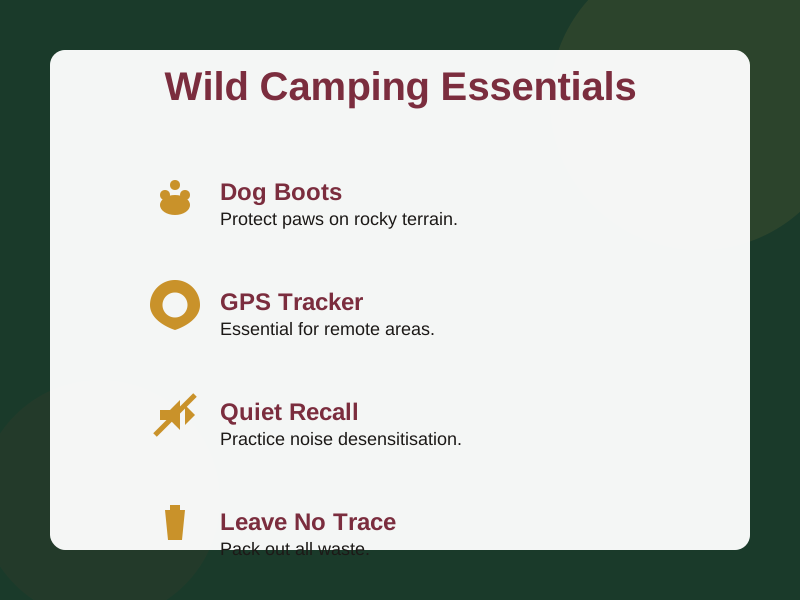
To ensure a peaceful night, recall is king. Start practising it in a park with typical distractions like other walkers and dogs, then gradually introduce more challenging elements – a frisbee, a squeaky toy, even a portable speaker playing traffic noise. When you get to the campsite, unexpected sounds like the tent’s zip, crinkling foil, or the flash of a headlamp can easily set off a barking chain reaction. Desensitising your dog to these specific noises is the single best way to ensure a quiet night in the wild.
Here’s a simple exercise I swear by:
The Zipper Test
- Lay the tent out with the door zipped and a treat on the floor inside.
- While the dog is busy eating the treat, zip and unzip the door three times.
- If he flinches, pause, give a calm “quiet” cue, and repeat until the zip is just another sound.
A reader wrote in after a night on Skye where his border collie barked at the wind-blown tent canvas, attracting a curious group of hikers who reported them. He solved it by spending a weekend on his balcony, running the Zipper Test daily until the dog ignored the noise entirely. This noise desensitisation also helps with the “Leave No Trace” mindset for pets – a dog that’s calm won’t chase wildlife or disturb nesting birds.
Essential Gear: What Your Dog Actually Needs
Dogs need more than a bowl and a lead when you’re out in the wild. The right kit keeps them comfortable, protects their paws, and gives you peace of mind that they won’t wander off.
- Boots – Absolutely essential on rocky terrain or hot sand. I’ve favoured Ruffwear Grip Treks for their durability and easy on/off design. They cost roughly £45-£55 per pair (approximate), but a single torn paw can mean a costly vet visit.
- Dog backpack – A small rucksack such as the Ruffwear Front Range lets your pooch carry a water bottle and a few snacks. It distributes weight evenly and keeps the leash free for you.
- Sleeping system – Dogs lose heat faster than humans. A Rab Ascent (paid link) 200-rated sleeping bag (approx. £150) paired with a Therm-a-Rest NeoAir XLite (paid link) pad (around £120) gives a cosy, insulated spot. Remember, a human sleeping bag isn’t enough – dogs need a bag that matches their lower body temperature.
- Safety kit – High-visibility collar with a reflective strip, and a Garmin InReach Mini 2 (paid link) GPS tracker (≈ £250) for remote areas. The tracker’s SOS button is a belt-and-braces precaution you’ll thank yourself for.
Day 1 vs. Multi-Day Packing
| Item | Day 1 (single night) | Multi-Day (3+ nights) |
|---|---|---|
| Boots | 1 pair | 1 pair + spare laces |
| Backpack | Small (1 L) | 2-3 L with extra water bladder |
| Sleeping bag | One dog-specific bag | Same bag + spare liner |
| Pad | Thin foam | NeoAir XLite + extra blanket |
| Safety | Collar + GPS | Same + lightweight first-aid kit |
I once tried to skimp on the sleeping bag, assuming my dog would curl up in the human one. Mid-night on the Cairngorms, the temperature dropped to –5 °C and my terrier shivered through the night – a mistake that cost me a cold-soaked pup and a replacement bag.
For a deeper dive into insulated options, see the Best Sleeping Bags guide.
Etiquette & Safety: Being a Good Neighbor
Wild camping is a privilege, not a right, and the “golden rule” is simple: If you disturb anyone, you’re camping wrong. Here’s how to keep it smooth.
- Waste disposal – Pack out every poo bag. Burying isn’t enough; the smell attracts wildlife and can upset landowners. A sturdy roll of biodegradable bags (≈ £5) is a small price for good stewardship.
- Barking management – If your dog starts barking, move the tent at least 30 m away and give a calm “quiet” cue. Don’t argue with a landowner – the moment you’re asked to leave, you’re already on thin ice.
- Livestock safety – The “sheep worrying” offence carries a fine and possible prosecution. Keep dogs on a lead within 30 m of any farmyard, and use a sturdy leash if you’re near grazing land.
- Fire & lighting – Use a small, controlled stove and keep a lantern off the ground to avoid startling nocturnal animals.
A fellow camper once left a tent on a Forestry England site without checking the fire ban – a ranger spotted the smouldering ash and handed them a formal warning. Lesson: always glance at the site’s current restrictions.
Best Locations: Where to Go
- Scotland – The Highlands, especially around Torridon and the Isle of Skye, offer expansive moorland where the Right to Roam applies. Remember to ask the crofter if you’re near a farm.
- Dartmoor – The only English national park with a statutory right to camp on open moorland. Stick to the higher ground, avoid private fields and respect the 2024 bylaw that bans camping within 100 m of a dwelling.
- Forestry England – Many forests, such as the New Forest and the Forest of Bowland, allow designated wild-camping spots. Check the forest’s website for the latest map – rules can change seasonally.
No matter where you pitch, a quick check of the local council or landowner website saves you a night of awkward explanations.
Disclaimer: Always verify the most recent bylaws or landowner permissions before you set foot on the ground.
Frequently Asked Questions
Is wild camping legal in the UK?
It depends on the nation. In Scotland you can camp almost anywhere under the Right to Roam (except near houses or roads). In England and Wales you need landowner permission, with Dartmoor being the notable exception that allows camping on open moorland by right.
Can I take my dog to Scotland?
Yes, the Right to Roam covers dogs too, but you must keep them under control near livestock and respect any landowner’s request. A quick call or note to the landowner is always appreciated.
What if my dog barks all night?
Move the camp immediately – a barking dog is the number-one reason campers get reported. Practice the “quiet” protocol before you go, and have a backup spot ready.
Do dogs need boots for wild camping?
Absolutely on rough terrain or hot sand. Human shoes can cut paws, and hard ground can cause bruises. Boots like Ruffwear Grip Treks protect pads and give better traction.
How do I keep my dog warm at night?
Use a dog-specific sleeping bag rated for the expected temperature and a lightweight insulated pad. Adding a fleece blanket underneath the pad gives extra cosy insulation.
Legal Rights Comparison
| Region | General Right to Camp | Key Exception | Sheep Worrying Rules |
|---|---|---|---|
| Scotland | Almost everywhere (except near dwellings/roads) | N/A | Must keep dog on lead near livestock |
| England & Wales | No general right – need permission | Dartmoor (open moorland) | Same – criminal offence if dog worries sheep |
| Dartmoor | N/A | Statutory right on open moorland | Must keep dog on lead near livestock |
| Forestry England | Designated spots only | N/A | Must keep dog on lead near livestock |
Where to Go From Here
You’ve got the legal map, the quiet-dog plan, the gear checklist and the etiquette handbook. The only thing left is to make sure you’ve got everything in order before you head out. That’s where my free Wild Camping Checklist comes in – a tidy one-page rundown of permits, gear, and safety steps that keeps you from forgetting that vital poop bag or GPS tracker.
Don’t let legal confusion or a noisy night ruin your adventure. Download the Free Checklist and step onto the trail with confidence.
Happy camping, and give your dog a good pat for being a proper companion out there. If you want to know more about my own adventures, check out my story.
Related Guides
For a complete overview, see our Advanced Wild Camping & Backpacking Scenarios UK.
Sources & Further Reading
As an Amazon Associate I earn from qualifying purchases. The dog gear linked above is kit I would trust on my own camps.
Dog behaviour and landowner attitudes vary. Keep your dog under close control and respect local restrictions.