Winter Wild Camping Tips: Staying Warm & Safe in the UK Cold
This page contains affiliate links. As an Amazon Associate we earn from qualifying purchases — this does not affect the price you pay.
The wind whistling through the pine, a sleeping bag feeling like a wet sack as the temperature slips ten degrees overnight in a Scottish glen — waking up shivering, half-asleep, having forgotten the one rule that keeps a night under the stars from turning into a nightmare: stay dry. If you’re eyeing a winter wild-camping adventure in the Lake District, Peak District, or the Highlands, this guide walks you through the exact steps that keep you warm, dry, and on the right side of the law.
How Does Site Selection Affect Winter Warmth?
Site selection dramatically impacts your warmth in winter. The UK’s winter microclimates are a bit of a faff if you don’t understand them, but essentially, where you pitch determines how much heat you lose. In valleys and glens, cold air pools like a fridge on a hot day – it’s called the “Fridge Effect”. Overnight, the ground radiates heat back into the air, but the low-lying air stays still and sinks, pulling the temperature down faster than on exposed ridges.
What this means for you: the coldest spots are often the lowest points in the landscape. Pitching on a ridge may feel windier, but the wind-chill factor is usually less lethal than a still, freezing valley.
Wind is the enemy. According to the Mountain Weather Information Service (MWIS), a 10 mph wind can feel 6 °C colder than the actual air temperature. That extra chill forces heat out of your tent and into the night sky.
Drainage matters. A sloping site prevents water from pooling under your bivvy – a common cause of a soaked sleeping bag. A gentle 5-10° slope is ideal; it lets rain run off while still offering shelter from the wind.
Do’s and Don’ts for Site Selection
Here are some quick pointers for picking your pitch:
- Do choose a spot on a slight incline, facing away from the prevailing wind direction.
- Do check for natural windbreaks – a stand of trees, a rock scree, or a ditch.
- Do arrive early to scout the ground; a quick walk around the area reveals hidden watercourses.
- Don’t set up in the bottom of a hollow or a north-facing valley where cold air settles.
- Don’t pitch on flat ground where water can collect; a small puddle can become a freezing slab overnight.
(For more on responsible site choice, see our other guides on the Wild Camping Guides blog).
The Golden Rule: Stay Dry
You can’t stay warm if you’re wet. Moisture inside the tent steals heat faster than any wind. Here’s why and how to beat it.
Moisture physics
When you breathe, sweat, or even exhale, water vapour fills the tent. In a sealed tent, that vapour condenses on the inner walls, turning your sleeping bag into a damp blanket. The result? You lose up to 30 % of your body heat.
Ventilation strategy
Keeping condensation at bay is crucial. Here’s how to manage your tent’s airflow:
- During the day: keep the top vent open to let warm, moist air escape. A small gap at the roof lets the rise-and-fall of air do its work.
- When the wind picks up: close the lower vent to stop drafts, but keep the top vent slightly ajar. This “vent at the top, not the bottom” cheat sheet keeps condensation low without sacrificing warmth.
The “Dry Sock” method
Never take your boots off inside the tent. Slip a dry pair of wool or synthetic socks over your feet, then pull your boots on just before you crawl in. It sounds a bit odd, but it prevents your feet from soaking in any stray moisture that might have collected inside the sleeping bag.
Staying dry also means keeping your clothing layers out of the tent’s interior. Store them in a waterproof stuff sack, and change into a dry base layer before you settle down.
Gear Deep Dive: What You Actually Need
Gear alone won’t keep you warm – it’s how the pieces work together that matters. Below is the shortlist of essentials, with the why behind each.
Sleeping bags
Look for a comfort rating of -5 °C to -10 °C. The rating is the temperature at which a standard adult can sleep comfortably. A hood is non-negotiable – it traps heat around your head, which can account for up to 30 % of body heat loss. Using a bag rated at 0 °C on a night in the Cairngorms means waking up with a frozen nose and a shivering chin – many walkers learn the hard way that a lower rating saves you from that misery.
Sleeping mats
The R-value measures a mat’s resistance to heat loss. For UK winter, aim for R ≥ 3.0. Outdoor gear manufacturers often recommend an R-value of at least 3.0 for winter conditions, as anything less lets the cold ground sap heat faster than you can replace it. A closed-cell foam mat with an R-value of 3.5 paired with an insulated air mattress does the trick, especially on damp ground.
Clothing – Base, Mid, Shell
Layering is key to adapting to changing conditions. Here are the essentials:
- Base layer: Merino wool or synthetic; never cotton. Wool keeps you warm even when damp.
- Mid layer: Fleece or lightweight down; adds bulk without weight.
- Shell: A waterproof, breathable jacket with a windproof front. Look for a Gore-Tex or eVent membrane – they’re worth the investment in the UK’s rainy climate.
Tents – 3-Season vs 4-Season
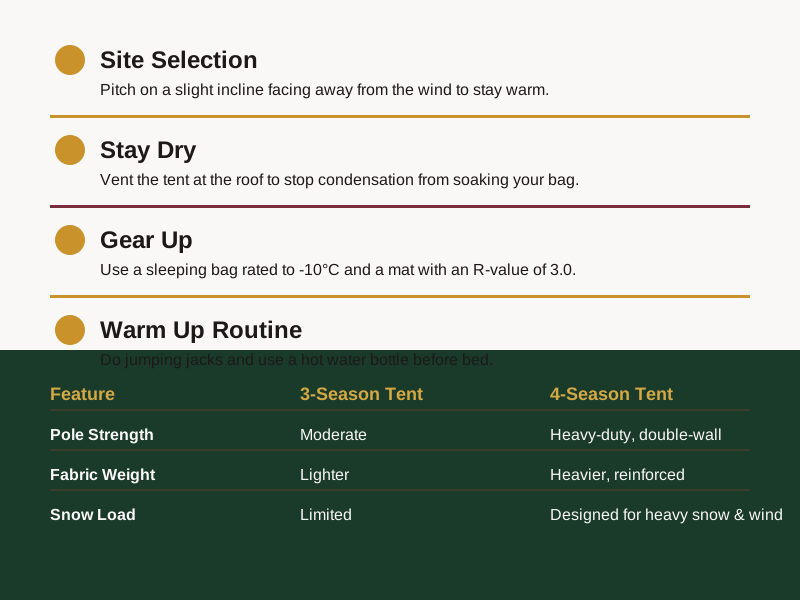
| Feature | 3-Season | 4-Season |
|---|---|---|
| Pole strength | Moderate | Heavy-duty, double-wall |
| Fabric weight | Lighter | Heavier, reinforced |
| Snow load | Limited | Designed for heavy snow & wind |
A 4-season tent is spot on for winter in the Lake District or the Highlands. It may feel a bit heavier, but the extra protection against wind and snow is priceless. (For a deeper look at specific models and what Harry uses, check out the Wild Camping Guides blog).
Hydration & The “Frozen Bottle” Nightmare
Nothing’s worse than waking up thirsty because your water bottle turned into a block of ice. The culprit? Air trapped in the bottle expands as it freezes, cracking the plastic and leaving you with a frozen, unusable container.
Strategies to keep water liquid
Avoid the frozen bottle nightmare with these tips:
- Inside the sleeping bag: Store a bottle close to your torso. Your body heat keeps it above freezing.
- Insulated covers: A neoprene sleeve adds a few degrees of protection.
- Hydration bladders: Bite-valve bladders work, but check the tube for ice – if the water freezes inside the tube, you’ll be left with a stiff straw.
Never leave a bottle outside your sleeping bag overnight in winter – it’s a recipe for a dehydrated, miserable morning.
Safety & Legal: Know Your Rights
Winter wild camping brings extra legal nuances. Getting “busted” is a real worry, but a clear understanding of the rules keeps you on the right side of the law.
Scotland
The Scottish Outdoor Access Code (backed by the Land Reform (Scotland) Act 2003) lets you camp on most land, provided you’re respectful and stay away from enclosed fields or private dwellings. The one exception: the Loch Lomond & Trossachs National Park, where Camping Management Zones require a paid permit between 1 March and 30 September (outside winter, so it doesn’t affect most winter trips, but worth knowing). Ramblers Scotland notes that you must still avoid areas with livestock during calving season and respect any signage indicating prohibited zones.
England & Wales
Here, wild camping is not a general legal right. Access Land - designated open country, mountain, moor, and downland - gives you a right to walk under the CRoW Act, not a right to camp; a discreet, low-impact overnight pitch there is often tolerated in winter when few people are about, but it isn’t guaranteed by law. You need permission to camp on private farms, cultivated land, or gardens, and the Ramblers guidelines stress checking local bylaws and, where possible, seeking landowner consent. The one statutory exception is the Dartmoor Commons, where camping is a confirmed legal right.
Winter-specific cautions
Be extra vigilant during winter months:
- Livestock: Calving in the Scottish Highlands or lambing in the Lake District means extra vigilance; stray dogs can cause panic.
- Forestry operations: Snow can hide ongoing felling or roadwork. Look for warning signs and avoid active sites.
Quick legal snapshot
- Scotland: Camp almost anywhere, respect livestock, avoid private signage, and check you’re outside the Loch Lomond & Trossachs permit zones if travelling in early autumn/spring shoulder season.
- England/Wales: Access Land gives a right to walk, not a guaranteed right to camp - seek permission where you can, stick to the Dartmoor Commons for a statutory right, and watch for seasonal farming activity.
(For a deeper dive into all aspects of safety, check out the Wild Camping Guides blog).
The “Warm-Up” Routine
A short pre-sleep ritual can make the difference between a cosy night and a freezing one.
- Exercise: Do five minutes of jumping jacks or star jumps. It raises your core temperature and gets blood flowing.
- Hot water bottle: Fill a sturdy Nalgene or metal bottle with boiling water (handle with care). Slip it into your sleeping bag, tucked against your feet or lower back.
- Dry clothes: Ensure your base layer is bone-dry before you crawl in. A damp layer saps heat faster than wind.
- Final check: Close the top vent just enough to keep the wind out but still allow a thin stream of air to escape.
Following this checklist each night adds a few degrees of warmth and keeps condensation at bay.
Common Questions
Can I use a 3-season tent for winter camping?
Generally, no. 3-season tents aren’t built to handle the wind and snow loads you’ll encounter in a British winter. A 4-season tent with a sturdy pole structure is the safer bet and will keep you much more comfortable.
What is the coldest temperature I can wild camp in the UK?
With a bag rated to -10 °C, an R ≥ 3.0 mat, and wind-proof clothing, you can comfortably camp in sub-zero temps. The real risk comes from getting wet, not just the air temperature, so staying dry is essential.
Do I need a permit to wild camp in the UK?
In Scotland, generally no permit is needed - the Right to Roam covers most land, aside from the Loch Lomond & Trossachs National Park permit zones (which apply March-September, so rarely affects winter trips). In England and Wales, wild camping isn’t a general legal right at all: Access Land gives you a right to walk, and you should seek the landowner’s permission to camp, except on the Dartmoor Commons where it’s a statutory right. Always check local bylaws before you go.
How do I stop condensation from soaking my sleeping bag?
Vent the tent at the roof (opposite the door) to let warm, moist air escape. Don’t seal the tent completely; a small opening does the trick to allow air circulation without letting in too much cold.
Is it safe to drink tap water in the UK in winter?
Yes, tap water is fine. If you’re filtering from streams, freezing can damage filters, so a chemical treatment like Steripen Adventurer Opti (paid link) is a good backup to ensure you have drinkable water even if temperatures drop unexpectedly.
Winter Tent Comparison
| Feature | 3-Season Tent | 4-Season Tent |
|---|---|---|
| Pole Strength | Moderate | Heavy-duty, double-wall |
| Fabric Weight | Lighter | Heavier, reinforced |
| Snow Load | Limited | Designed for heavy snow & wind |
Before You Buy
Winter wild camping isn’t a myth reserved for hardcore mountaineers – it’s a reachable, rewarding experience if you respect the elements and the law. Pick a site with a gentle slope, choose gear rated for sub-zero temperatures, keep everything dry, and follow a simple warm-up routine before you hit the sack.
You now have the full picture — Download the Free Checklist. It walks you through every item on this guide, ensuring nothing slips through the cracks before you set off.
Stay warm, stay dry, and enjoy the quiet magic of a winter sunrise over the hills. Safe travels.
Related Guides
For a complete overview, see our Advanced Wild Camping & Backpacking Scenarios UK.
Further Reading
- Mountain Weather Information Service (MWIS)
- Ramblers Scotland
- Ramblers (England & Wales)
Products linked above are ones we recommend based on owner feedback and UK-condition testing reports.
Winter conditions in the UK can turn severe quickly. Check the Mountain Weather Information Service before any cold-weather camp.